Strategic Strike Rail Replacement: Your Guide to Rapid, Compliant Workforce Solutions
Navigate industrial action and critical infrastructure maintenance seamlessly with expert staffing strategies. Learn how to hire resilient, skilled teams for urgent strike rail replacement projects across the UK.
Secure Your Project Workforce Now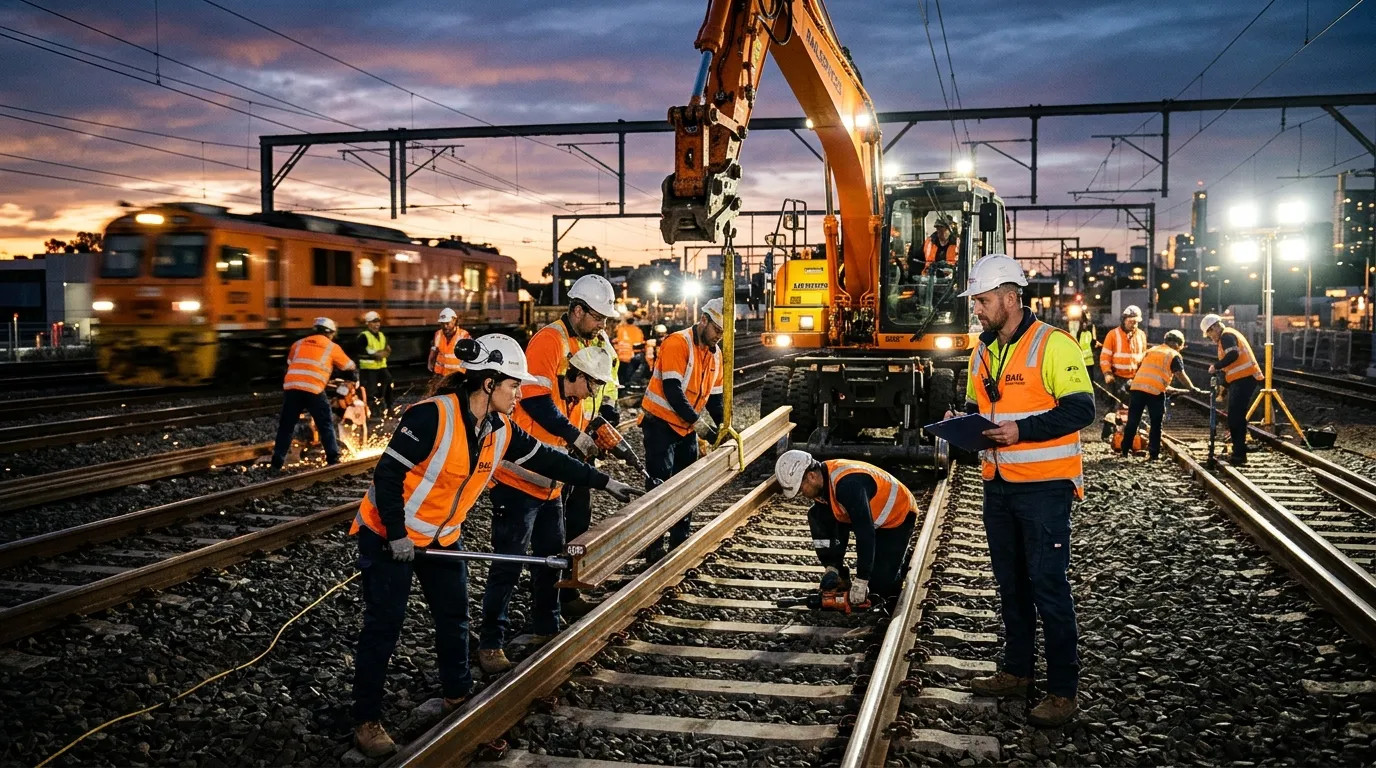
Mastering Strike Rail Replacement Staffing
Explore our multi-faceted approach to building and managing the essential teams required for successful rail infrastructure projects during periods of industrial action.
Understanding the Strike Rail Replacement Challenge
Strike rail replacement represents one of the most critical and time-sensitive challenges in modern infrastructure management. It involves the rapid, safe, and efficient substitution of rail components during planned industrial action or unanticipated work stoppages. The primary objective is to maintain network integrity, ensure passenger and freight safety, and minimize economic disruption. Unlike standard maintenance, these projects operate under intense pressure, with compressed timelines and often within complex regulatory environments. Success hinges not just on technical skill, but on the ability to mobilize a large, coordinated, and highly compliant workforce at a moment's notice.
The scale of a typical strike rail replacement project can be staggering. It may involve hundreds of personnel, from certified track engineers and welders to Warehouse Operatives managing materials logistics, and safety coordinators ensuring every procedure is followed to the letter. Delays are not merely inconvenient; they can result in significant financial penalties for operators and erode public trust. Therefore, the foundational step is a comprehensive project overview that identifies all critical path activities, from initial site assessment and material procurement to the final safety certification and handback.
Pro-Tip: Pre-emptive Workforce Planning
The most successful rail operators engage with specialized staffing partners before a strike is announced. Building a vetted, on-call talent pool of rail engineers, safety officers, and logistics coordinators can reduce mobilization time from weeks to days. Partnering with a Strategic Staffing Agency Stratford CT or a UK equivalent provides access to this pre-vetted network.
Building Your Resilient Replacement Team
Staffing for strike rail replacement is a multi-disciplinary endeavor. It requires a blend of highly specialized permanent roles and a scalable pool of temporary support staff. The core team typically consists of Project Managers, Civil Engineers, Track Specialists, and Rail Safety Managers. These roles require deep industry experience and often specific Network Rail or other regulatory body certifications. Surrounding this core is a flexible perimeter of essential support roles. This includes Events Set-Up And Break-Down Crew who are adept at rapid site establishment and clearance, drivers with ADR licenses for transporting materials, and a cohort of general laborers trained in rail environment safety.
A modern staffing strategy leverages a mixed model. Permanent staff provide institutional knowledge and manage critical safety protocols, while temporary agency staff offer the scalability needed for the intensive, short-term physical work. This is where a specialist agency proves invaluable. They handle the immense administrative burden—from payroll and right-to-work checks to ensuring all personnel hold the necessary Personal Track Safety (PTS) cards and medical certifications. This allows project leadership to focus purely on execution. For ongoing facility needs beyond the rail project, such as maintaining site offices or worker accommodations, services from a Housekeeping or Property Maintenance team can be seamlessly integrated.
Navigating the Compliance Maze
Compliance is the non-negotiable bedrock of any rail work. A single oversight can halt a project and lead to severe legal repercussions.
Orchestrating People & Materials
Logistics extends beyond moving steel and ballast. It's about the precise coordination of human capital.
Why a Specialized Staffing Partner is Critical
Managing a strike rail replacement project in-house stretches resources thin. Partnering with an expert agency delivers tangible benefits across every project phase.
Rapid Mobilization
Cut through delays with pre-vetted talent pools. We can deploy certified track workers, safety supervisors, and logistics coordinators within 24-48 hours, not weeks. This speed is crucial for mitigating the impact of industrial action and adhering to strict network access windows.
Full Compliance Assurance
We manage the entire compliance lifecycle. From verifying PTS cards, medicals, and right-to-work documents to ensuring all contractors understand site-specific safety briefings (SSSB), we remove the administrative burden and risk from your team. This holistic approach is similar to the rigorous standards applied when you need to Hire Physical Therapist In Wembley HA9 for a clinical setting.
Scalable & Flexible Resourcing
Scale your workforce up or down daily based on project phase. Need 50 laborers for track lifting one day and 20 skilled welders the next? Our flexible model, supported by a large national network, provides this agility without long-term employment commitments, much like sourcing Temporary Staffing Solutions for seasonal warehouse peaks.
Single Point of Contact
Simplify management with one dedicated account manager. They coordinate all communications, timesheets, payroll, and issue resolution, freeing your site managers to focus on technical delivery and safety oversight. This consolidated approach mirrors the efficiency found in Comprehensive Catering Staffing Services for large events.
Industry-Specific Expertise
Our recruiters understand rail terminology, safety protocols (COSHH, manual handling), and the unique shift patterns of track work. This deep sector knowledge ensures we source candidates who are not only qualified but also culturally fit for the high-pressure, safety-first rail environment, a specialization as distinct as finding Spa Therapist professionals for a luxury wellness center.
Cost Control & Predictability
Gain clear visibility over labour costs with all-inclusive hourly rates. Avoid hidden expenses related to recruitment advertising, employer liabilities, and overtime miscalculations. This financial clarity allows for accurate project budgeting and is a cornerstone of professional Staffing & Recruitment partnerships.
The Step-by-Step Process: From Strike Notice to Project Completion
Executing a successful strike rail replacement requires a meticulously choreographed process. The moment a strike is announced or anticipated, the clock starts ticking. The first 24 hours are critical for activating your contingency plan, which should be developed in partnership with your staffing agency.
Phase 1: Activation & Assessment (Day 1): Immediate consultation with the staffing partner to review the project scope, required headcount by role, and specific certification requirements. The agency activates its pre-vetted talent pools while your team finalizes site access plans and material delivery schedules from suppliers.
Phase 2: Mobilization (Days 2-3): Candidate profiles are presented for key roles. Interviews and final vetting, including urgent right-to-work and credential checks, are conducted. Travel and accommodation for workers are arranged if the site is remote. Simultaneously, support staff for site services, potentially including Cleaning Jobs in London for site welfare units, can be sourced.
Critical Path Checklist
- ✓ Secure Network Rail or equivalent authority permits for worksite access.
- ✓ Confirm all personnel hold valid PTS, medical, and drug/alcohol screening.
- ✓ Establish clear communication hierarchy and emergency protocols.
- ✓ Pre-position materials (rails, sleepers, ballast) via coordinated logistics.
- ✓ Arrange welfare facilities (catering, sanitation, first aid).
Integrating Support Functions for a Cohesive Project
A rail replacement site is a microcosm of industry. Beyond the track engineers, a full ecosystem of support roles is essential for efficiency and morale. Event Catering Staffing Services can be adapted to provide high-volume, shift-based catering for workers. Logistics coordinators, often with experience from sectors like Warehouse Jobs in London, manage the just-in-time delivery of materials to the worksite fringe. Furthermore, administrative staff are needed to handle the influx of daily paperwork, timesheets, and inductions—a function similar to Front Of House Jobs in a corporate setting, ensuring smooth operational flow.
Risk Mitigation and Contingency Planning
No strike rail replacement project is without risk. Proactive identification and mitigation are paramount. Key risks include: Workforce No-Shows: Even with the best plans, some agency staff may not arrive. A reputable partner will have a guaranteed replacement policy, ensuring cover is provided within a few hours, a standard in professional Immediate Start Recruitment services. Safety Incidents: A rigorous, daily toolbox talk and a visible, empowered safety culture are non-negotiable. All staff must feel responsible for not only their own safety but that of their colleagues. Material Delays: Redundant supply chains and on-site buffer stocks of critical components can prevent work stoppages.
Contingency planning should be documented and shared with all stakeholders. It should outline steps for escalating issues, alternative work schedules if delays occur, and clear communication channels with the rail network operator. This level of detailed planning is what separates ad-hoc reactions from professional project execution.
Technology's Role in Modern Rail Replacement Staffing
Leveraging technology is no longer optional; it's a critical efficiency driver. Specialized staffing platforms now offer real-time visibility into the workforce. Project managers can log in to see exactly who is on site, their certifications and expiry dates, and their shift patterns. Digital timesheets with geolocation verification eliminate disputes and speed up payroll. Mobile apps are used for delivering site-specific safety briefings and collecting electronic signatures to confirm understanding.
Furthermore, data analytics are used post-project to review performance metrics: average time to fill roles, worker retention rates on night shifts, and incident reports. This data informs future planning, making each subsequent project more efficient. This tech-forward approach is akin to the systems used in Dynamic Workforce Solutions across other high-turnover industries.
Future-Proofing with AI and Automation
Looking ahead, Artificial Intelligence is set to transform strike rail replacement staffing. Predictive algorithms can analyze strike vote patterns, weather data, and material supply chains to recommend optimal mobilization dates and workforce numbers. AI-driven candidate matching can instantly source workers with the exact blend of certifications (e.g., PTS + welding + COSHH) needed for a specific task, reducing sourcing time from days to minutes. Automated compliance checks will scan digital credential wallets, instantly flagging any upcoming renewals. Embracing these technologies will be key to maintaining a competitive edge in rapid-response infrastructure staffing.
Case Study: A Model for Success
Consider a recent project in the Midlands where a 72-hour strike window was announced for a critical freight corridor. The operator had a standing agreement with a specialist staffing agency. Within 4 hours of formal notice, a project kick-off call was held. The agency's dedicated rail team worked through the night, matching over 120 personnel to required roles from their pre-vetted database.
By the next morning, CVs for key supervisory roles were approved. Compliance officers worked in parallel, verifying every single PTS card and right-to-work document digitally. Travel was arranged for specialists from Scotland and Wales. The agency also provided a team for site welfare management, ensuring hot food and facilities were available 24/7, a service model borrowed from high-end Hospitality Staffing.
The result? The workforce was fully mobilized and inducted 12 hours before the possession started. The project was completed with a 2-hour buffer before the line reopened, achieving zero reportable safety incidents and receiving commendation from the network operator. This success was directly attributable to the pre-planned partnership and the agency's deep rail sector expertise, demonstrating the immense value of a strategic staffing approach.
Frequently Asked Questions on Strike Rail Replacement Staffing
For urgent strike cover, our target mobilization time is 24-48 hours for the initial wave of core personnel (Project Managers, Safety Officers, Team Leaders). This is possible due to our pre-vetted talent pools and dedicated rail recruitment team that works on-call for such emergencies. Full workforce deployment for large-scale projects typically follows within 72 hours, contingent on final client approvals and site access confirmation. This speed is a core component of our rapid hiring solutions.
As the employer of record for the temporary staff we supply, we assume full responsibility for pre-placement compliance checks. This includes verifying valid Personal Track Safety (PTS) cards, issuing company-specific safety briefings, conducting right-to-work checks, and ensuring any medical or drug/alcohol screening requirements are met. We provide you with a compliance dossier for each worker before they arrive on site. The client remains responsible for site-specific safety briefings (SSSB) and ongoing safe working conditions.
Absolutely. Logistics are a fundamental part of our service. We coordinate travel, arrange secure parking, and book accommodation for workers coming from distant locations. For night shifts, we ensure welfare facilities (heated rest cabins, catering) are part of the plan. We understand the challenges of remote and overnight work, drawing on experience from staffing complex Facilities Management and Warehouse Operative roles in isolated locations.
All our workers are covered by Employer's Liability and Public Liability insurance. In the event of an injury, our dedicated support team manages the incident reporting process and provides immediate replacement staff to avoid project delay. If a worker fails an on-site safety spot-check or does not meet the required standards, they are immediately withdrawn, and we provide a qualified replacement at the earliest opportunity, typically within the same shift window.
Quality is assured through a multi-stage process: 1) Rigorous Vetting: We verify not just certifications but also work history and references from previous rail projects. 2) Skills Assessment: For key technical roles, we conduct practical assessments or in-depth technical interviews. 3) Sector Specialization: Our recruiters are trained in rail industry requirements. 4) Performance Tracking: We monitor worker performance feedback from clients and use it to refine our talent pool. This meticulous approach is similar to how we source for other safety-critical sectors, such as Maintenance Staff for complex facilities.
Don't Let a Strike Derail Your Operations
Proactive planning with a specialist staffing partner turns a crisis into a managed project. Ensure your rail network remains operational, safe, and efficient, no matter the industrial climate.
Partner with experts who understand the urgent, complex, and safety-critical world of strike rail replacement. Contact us now to build your contingency plan.