


Unlock Operational Excellence with Strategic Long Term Staffing (Payrolling) Services
A comprehensive guide to building a resilient, compliant, and high-performing workforce for sustained business growth. Discover the modern solution to Direct Hire Placement Meaning and beyond.

Navigating the Modern Workforce: Your Strategic Options
Understanding the distinction between various staffing models is crucial for strategic workforce planning. The right choice impacts your compliance, overhead, and agility. Explore the core models below to identify the best fit for your operational needs.
The Strategic Power of Long-Term Staffing
Long Term Staffing (Payrolling) Services represent a sophisticated, hybrid solution that blends the flexibility of contracting with the stability of permanent employment. In this model, the staffing agency becomes the legal employer (the payroll) for the worker you select, managing all HR, payroll, tax, and compliance responsibilities. You retain full operational control, directing their day-to-day work as if they were your own employee, but without the administrative burden or long-term contractual risk.
This model is ideal for project-based work, covering extended absences like maternity leave, or for"try-before-you-commit" periods that can seamlessly transition into a Direct Hire Placement. It provides a crucial buffer, allowing you to evaluate a worker's skills and cultural fit over months, not just weeks, before making a permanent hiring decision. For sectors with fluctuating demands but a need for consistent skill, such as warehouse operations or ongoing property maintenance, it's a game-changer.
Defining Direct Hire Placement
The Direct Hire Placement Meaning is straightforward: a recruitment agency sources, vets, and presents candidates for a permanent position within your company. Upon acceptance, you hire the candidate directly onto your payroll, assuming all employer responsibilities. This is the traditional route for filling core, permanent roles where long-term integration is key.
Pro-Tip:
Use Long Term Staffing as a strategic precursor to Direct Hire. A 6-12 month payrolling arrangement can serve as an extended, low-risk probation, ensuring both skill and cultural alignment before you offer a permanent contract. This significantly reduces the costly risk of a bad permanent hire.
While direct hire is essential for leadership and core operational roles, it lacks the flexibility needed for scaling teams quickly or managing project-specific talent. For example, hiring a permanent Hotel Housekeeping Supervisor is a direct hire decision, but staffing a large event through events staffing is better suited to flexible models.
The Agility of Temporary Staffing
Temporary staffing solutions are designed for short-term needs: seasonal peaks, sudden staff shortages, or one-off projects. The agency is the employer, providing workers for days, weeks, or occasionally months. It's the ultimate in flexibility but isn't designed for building long-term team cohesion or retaining specialised knowledge.
The key differentiator from Long Term Staffing is duration and strategic intent. Temporary staffing plugs an immediate gap. Long Term Staffing (Payrolling) builds a sustained, project-specific team with a higher degree of integration and commitment. For instance, you might use temp staff for a weekend festival clean-up, but use payrolling for a 9-month IT system implementation requiring a dedicated analyst.
Why Leading Businesses Choose Long-Term Payrolling
Full Compliance & Risk Mitigation
The agency shoulders all employer liability, including IR35 assessments (for contractors), PAYE, National Insurance, pensions auto-enrolment, and employment rights. This protects your business from costly legal pitfalls and ensures 100% adherence to ever-changing UK employment law, allowing you to focus purely on productivity.
Significant Cost Efficiency & Predictability
Eliminate the hidden costs of hiring: recruitment advertising, HR administration, software, and the management time for payroll processing. You pay a single, transparent weekly or monthly invoice. This converts variable, unpredictable HR costs into a fixed, manageable operational expense, improving financial forecasting.
Operational Flexibility & Scalability
Scale your team up or down based on project pipelines, seasonal demand, or business growth without the constraints of permanent headcount freezes or redundancy processes. This is invaluable for managing warehouse operatives during peak logistics seasons or front of house staff for a new hotel opening.
Access to Premium Talent & Retention
Many skilled professionals prefer the variety and project-based nature of payrolled assignments. By offering this option, you tap into a wider, often more experienced talent pool who may not seek traditional permanent roles. Furthermore, providing a clear pathway to potential Direct Hire Placement acts as a powerful retention tool, motivating performance.
Streamlined Onboarding & Management
The agency handles all pre-employment checks, contracts, and inductions, getting your worker productive faster. You manage their tasks and output, while the agency manages their HR needs, sick pay, and holiday requests. This creates a clean, efficient division of labour, freeing your managers to lead rather than administer.
Strategic Workforce Planning
Long Term Staffing allows you to build a"core and flex" workforce model. Your permanent employees form the core knowledge base, while payrolled staff provide the flexible capacity to execute projects and manage demand spikes. This hybrid model is the future of resilient business operations, as detailed in resources on dynamic workforce solutions.
Implementing Long-Term Staffing: A Step-by-Step Guide
Successfully integrating Long Term Staffing (Payrolling) Services into your business requires a clear process. Follow this actionable roadmap to ensure a seamless transition and maximum return on investment.
The Implementation Blueprint
- Needs Analysis & Role Definition: Precisely define the role, skills, experience, and project duration. Is this for a specialised spa therapist for a new wellness centre launch, or a team of pickers and packers for a year-long e-commerce contract? Clarity here is paramount.
- Partner Selection: Choose an agency with proven expertise in your sector and a robust payrolling infrastructure. Look for transparent pricing, compliance guarantees, and a strong talent network. An agency that also understands Direct Hire Placement Meaning can offer a smoother transition later.
- Candidate Sourcing & Vetting: Your agency should present pre-vetted candidates aligned with your needs. You conduct the final interviews and select the worker, ensuring the right cultural and skills fit.
- Contract & Onboarding: The agency issues the employment contract to the worker and manages all legal onboarding. You provide the role-specific induction, systems access, and safety briefings.
- Ongoing Management & Communication: Maintain regular performance feedback with the worker. The agency acts as the HR point of contact for the employee, while you manage daily output. Establish a clear three-way communication channel.
- Review & Transition Planning: At agreed intervals, review performance against goals. Decide to extend the payrolling arrangement, end it, or—if it's been a resounding success—initiate a Direct Hire Placement process to bring the talent permanently onto your team.
Expert Insight: The Financial Impact
A common misconception is that Long Term Staffing is more expensive than direct hiring. When you factor in the total cost of ownership—recruitment fees, HR personnel time, software subscriptions, employer NI, pension admin, and the immense cost of a mis-hire—payrolling often presents a superior cost-benefit ratio. It transforms capital expenditure (hiring costs) into operational expenditure (staffing fees), which can be more favourable for cash flow and budgeting. For a deep dive into cost comparisons, our analysis on comprehensive staffing solutions provides detailed breakdowns.
Industry-Specific Applications of Long-Term Payrolling
The versatility of Long Term Staffing Services makes it a powerful tool across numerous sectors. Here’s how it drives value in key industries we serve.
🏭 Logistics & Warehouse
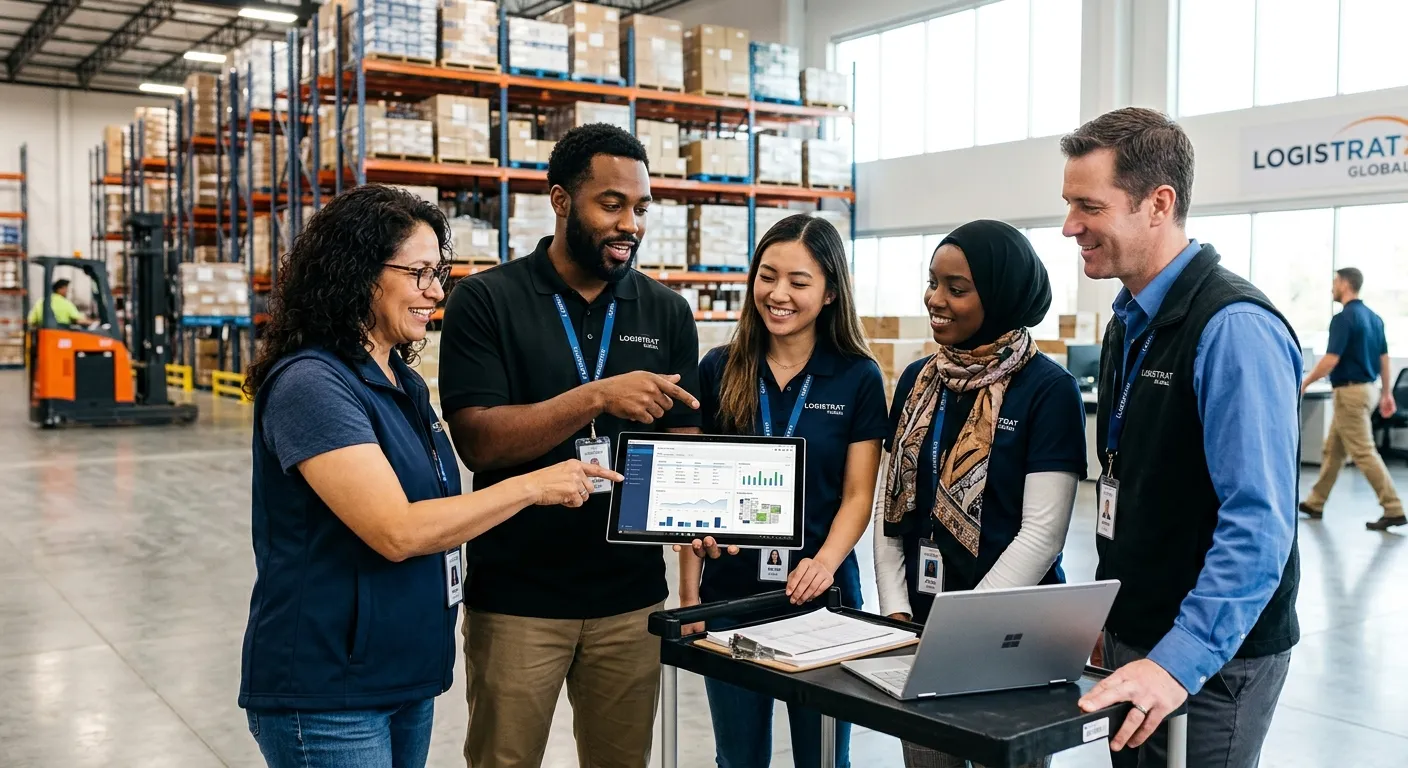
For multi-year contracts with retailers or e-commerce giants, businesses need reliable, skilled teams without permanent headcount lock-in. Payrolling allows for the creation of dedicated teams of warehouse assistants, forklift drivers, and supervisors for the contract's duration. It ensures consistent coverage for roles like warehouse operative jobs while allowing for easy scaling during peak periods like Black Friday or Christmas.
This model provides the stability needed for proper training and safety protocol adherence, which is less feasible with pure temporary staffing.
🏨 Hospitality & Events
Opening a new hotel, restaurant, or spa requires a full team ready for launch. Long Term Staffing can supply everything from housekeeping staff and banqueting staff to waitstaff for the critical first 6-12 months. This gives management time to evaluate performance in a live environment before converting top performers to permanent Direct Hire Placement.
Similarly, for long-running events or seasonal attractions, it provides a committed team for the entire season, improving service quality and operational continuity.
🛠️ Facilities & Maintenance
Property management companies and large facilities often have ongoing maintenance projects, refurbishments, or cyclical upkeep that require skilled tradespeople for extended periods. Using payrolling for handyman professionals, cleaners, or set-up and break-down crews ensures you have a familiar, reliable person on-site who understands the specific property, without the administrative burden of employing them directly for a non-permanent need.
📞 Office & Administration
Covering long-term sickness, maternity/paternity cover, or special projects (like a data migration or office move) are perfect use cases. A payrolled receptionist or administrative assistant can integrate deeply into the team for 9-12 months, providing continuity that a series of short-term temps cannot. This model is central to modern comprehensive catering staffing services for corporate headquarters, as well.
FAQs: Your Questions on Long-Term Staffing Answered
We address the most common questions businesses have when considering Long Term Staffing (Payrolling) Services.
The key differences are duration, integration, and strategic intent. Temporary staffing is for short-term, immediate cover (days/weeks). Long-Term Payrolling is for extended engagements (months/years) where the worker is deeply integrated into your team and processes. The worker has more stability and you invest more in their role-specific training, treating them as a quasi-permanent member for the assignment's duration. It's a strategic partnership, not just a fill-in.
This is a collaborative process. You, as the hiring manager, are responsible for day-to-day performance feedback, task direction, and initial performance discussions. The staffing agency, as the legal employer, manages formal disciplinary procedures, performance improvement plans (PIPs), and any eventual termination in consultation with you. Clear communication channels between you, the worker, and the agency are essential for this to work smoothly.
Absolutely. This is one of the model's greatest strengths. It acts as an extended, low-risk evaluation period. If the worker excels and a permanent headcount becomes available, you can initiate a Direct Hire Placement process. The transition is typically seamless, and many agencies (including ours) will have a pre-agreed conversion fee structure that is significantly lower than a standard recruitment fee, as much of the vetting and onboarding work is already complete.
Yes. In a proper payrolling arrangement, the staffing agency is the legal employer. This means the liability for IR35 status determination (for roles that could be deemed contracting), along with all other employer responsibilities—PAYE, National Insurance, Holiday Pay, Pension Auto-Enrolment, and Employment Rights—rests squarely with the agency. You receive a guarantee of compliance, shielding your business from significant financial and legal risk.
The agency manages all of this. The worker will request holiday and report sickness to their employer (the agency) in line with their employment contract. The agency will pay them statutory sick pay (SSP) and holiday pay. They will notify you of the absence. For prolonged sickness or planned holiday, you can request a temporary replacement from the agency, ensuring your operational continuity is maintained.
Ready to Build Your Agile, High-Performing Team?
Stop letting administrative complexity and hiring risk slow your growth. Our expert Long Term Staffing (Payrolling) Services provide the strategic flexibility and compliance assurance you need to execute your vision. Whether you're scaling a warehouse in England, opening a new spa, or managing a long-term project, we are your partner in workforce innovation.
Transform your workforce strategy today. Discover the true meaning of efficient, strategic hiring beyond just Direct Hire Placement.