


Does Safeway Hire Full-Time Employees? Your Complete Hiring Guide
Exploring career stability at major retailers? The question of whether Safeway hires full-time employees is a common one for job seekers. This comprehensive guide provides the definitive answer, along with actionable insights into the hiring process, benefits, and how it compares to other retailers like Ross.
Navigating Retail Hiring: A Multi-Category Overview
Safeway's Full-Time Employment Landscape
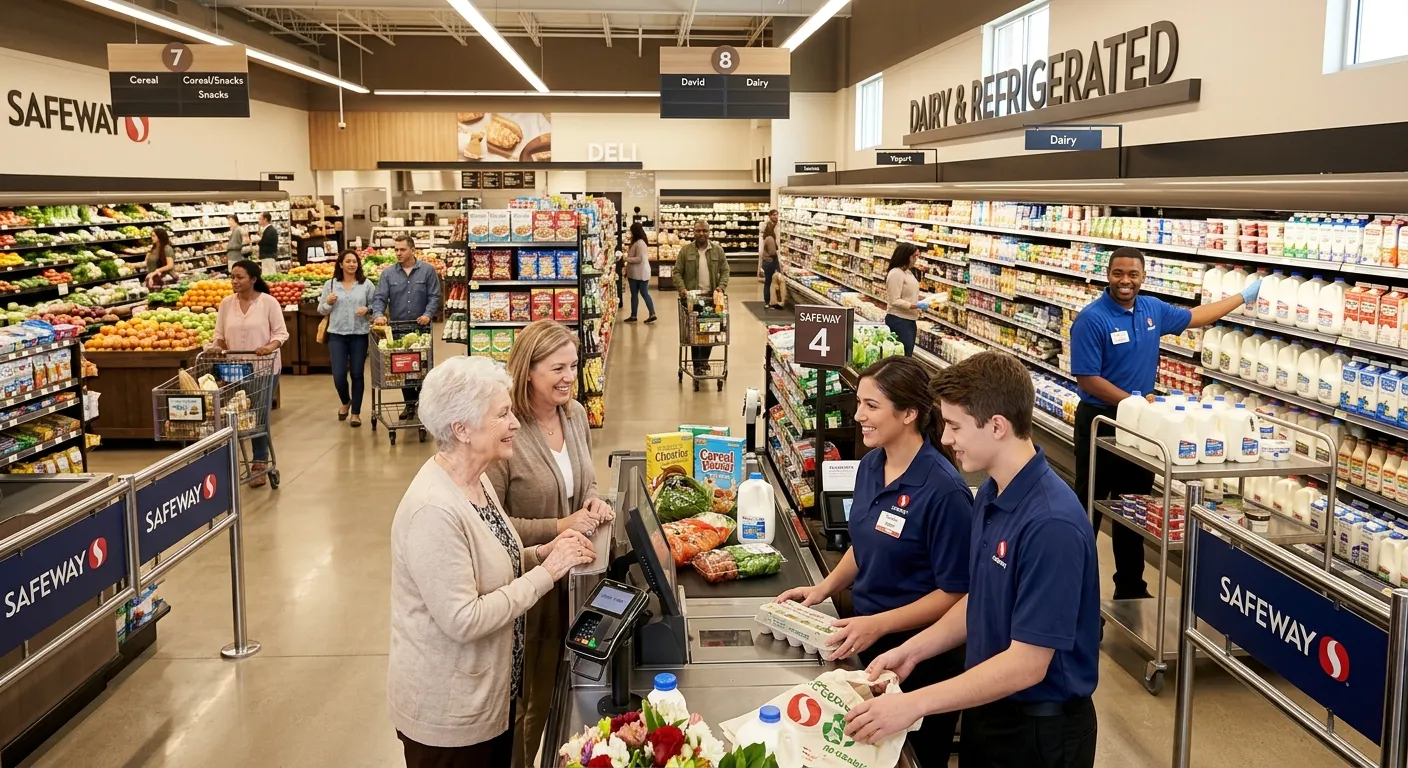
Yes, Safeway does hire full-time employees, but the availability of such positions can vary significantly by location, departmental needs, and current business volume. As a large supermarket chain, Safeway's workforce is a mix of full-time, part-time, and seasonal staff. Full-time roles typically offer greater stability, a consistent schedule, and access to a comprehensive benefits package that may include health insurance, paid time off, and employee discounts.
Key departments where full-time positions are more commonly found include management, pharmacy, bakery, deli, and experienced customer service roles. It's important to note that many employees start in part-time or seasonal positions and demonstrate reliability and skill to transition into full-time opportunities—a common pathway in large-scale retail operations. For businesses looking to mirror this structured hiring approach, utilizing a dedicated service like our Comprehensive Staffing Solutions can streamline the process of building a reliable, mixed-schedule team.
Pro-Tip: How to Land a Full-Time Role at Safeway
Apply during peak hiring seasons (pre-holiday, summer). Express your desire for full-time work clearly in your interview and application. Be open to starting in a part-time role with proven performance as a pathway to full-time conversion. Highlight any prior retail or customer service experience.
Understanding Full-Time Opportunities at Ross Stores
Similar to the query does Safeway hire full time employees, job seekers often ask, does Ross hire full time employees? Ross Dress for Less, as an off-price retailer, also employs a blended workforce. Full-time positions exist but are often concentrated in store management, loss prevention, and supervisory roles within departments like shipping/receiving.
The retail industry as a whole relies on flexible scheduling to match customer footfall, meaning a high proportion of front-line sales associate roles are part-time. However, demonstrating strong performance, flexibility, and leadership can lead to full-time advancement. This model is not unique to Ross or Safeway; it's a common feature in retail and hospitality staffing where demand fluctuates.
Why Partnering with an Agency Can Fast-Track Your Hiring
Whether you're seeking a full-time role or looking to hire full-time staff, recruitment agencies offer a strategic advantage. Agencies have established relationships with major retailers and other employers, providing direct access to unadvertised roles and a faster application pipeline. For employers, agencies handle the heavy lifting of sourcing, vetting, and initial interviewing.
Consider this: the internal cost of recruiting, onboarding, and training a single full-time employee can be substantial. As highlighted in our resource on The Real Cost of Bad Hiring vs. Using a Temp Agency, partnering with experts can mitigate risk and save significant time and money, especially for roles requiring specific skills like those in Warehouse Operatives or specialized Chef and Kitchen Staff.
Benefits of Full-Time Employment in Major Retail
Stability & Consistent Income
Full-time roles provide predictable hours and a reliable paycheck, crucial for financial planning. This contrasts with variable-hour part-time or gig work. For employers, offering stability is key to retention, a principle applied in our Dynamic Workforce Solutions.
Comprehensive Benefits Packages
Health insurance, dental, vision, retirement plans (like 401k), and paid time off are typically reserved for full-time staff. These benefits are a major draw for quality candidates, similar to the attractive packages we help structure for roles in Spa and Wellness and other sectors.
Career Advancement Pathways
Full-time employees are often first in line for internal promotions, management training programs, and skill development courses. This investment in growth is a hallmark of serious employers, whether in retail supermarkets or in fields like Hotel Housekeeping Supervision.
A Deep Dive into Safeway's Hiring Process & How to Succeed
Understanding the nuances of does Safeway hire full time employees requires a look at their operational model. Safeway, like many national chains, decentralizes hiring to the store level. This means the Store Manager or Department Heads have significant say in whether a vacancy is filled as full-time or part-time based on budget and needs.
Step-by-Step: From Application to Offer
- Online Application: All candidates must apply via the Safeway/Albertsons Careers portal. Tailor your resume with keywords from the job description.
- Assessment Tests: For certain roles, you may encounter online assessments focusing on customer service scenarios or basic skills.
- Interview Stages: Typically one or two interviews, often starting with a hiring manager and potentially including a department lead. Be prepared to discuss availability, reliability, and customer focus.
- Background Check & Drug Screening: Mandatory for most full-time positions, reflecting the responsibility inherent in such roles.
- Job Offer & Onboarding: If successful, you'll receive a formal offer outlining hours, pay, and benefits. Onboarding includes training on safety, POS systems, and company policies.
Expert Insight: The Employer's Perspective
From a hiring manager's viewpoint, committing to a full-time employee is a significant investment. They are looking for candidates who demonstrate:
- Long-Term Potential: A desire to grow with the company, not just a stopgap job.
- Flexibility Within Core Hours: Willingness to work weekends or early/late shifts as needed.
- Problem-Solving Initiative: The ability to handle customer issues and store tasks independently.
This mindset is universal. Whether hiring for Front of House Jobs in a restaurant or for a Warehouse Assistant, employers value these core traits in full-time hires.
Mastering the Modern Hiring Process
Understanding the dynamics between traditional hiring and modern agency-led solutions can give both job seekers and employers a critical edge. This video breaks down the evolving landscape.
Frequently Asked Questions: Full-Time Hiring at Safeway & Beyond
Yes, the primary and official channel for applying for full-time roles at Safeway is through their corporate careers website. All openings, whether full-time or part-time, are posted there. However, competition can be fierce. Networking with store managers (in-person with a resume during non-peak hours) can sometimes draw attention to your application. For a wider array of direct hiring opportunities across sectors, exploring established agency portals like our Looking For Staff page can provide more streamlined options.
The process is structurally similar but often more rigorous for full-time positions. Interviews may involve more stakeholders (e.g., district manager). Background and reference checks are more thorough. The questions will probe deeper into long-term career goals, reliability, and past experiences handling responsibility. This mirrors processes in other industries; for example, hiring a Spa Therapist or Housekeeping Staff full-time involves a more detailed evaluation of commitment and skill than a temporary contract.
Typically, there is a waiting period, often 30 to 90 days of continuous employment, before benefits like health insurance become active. However, details can vary based on location and union contracts (if applicable). It's a crucial question to ask upon receiving a job offer. Understanding benefit structures is key, whether in retail or other fields like Nursing, where comprehensive packages are a major draw.
Consider industries with a high demand for permanent staff. Warehousing and logistics, for instance, consistently offer full-time roles for Warehouse Operatives. The hospitality sector seeks permanent Front of House managers and supervisors. Skilled trades, such as Handyman services, often lead to full-time contracts. Leveraging a recruitment agency can provide direct access to these stable opportunities across sectors.
Ready to Secure Your Full-Time Workforce or Next Career Move?
Whether you're a job seeker asking"does Safeway hire full time employees" or a business owner needing reliable full-time staff, the journey starts with a strategic action. Don't leave your hiring or career growth to chance.
Or, explore our About Us page to learn how we connect talent with opportunity.
This comprehensive guide has answered the core question of does Safeway hire full time employees and extended the analysis to similar retailers like Ross. The key takeaway is that full-time roles are available but competitive. Success lies in a targeted application strategy, showcasing long-term value, and considering all pathways—including partnerships with specialized recruitment agencies that provide direct access to the best full-time opportunities across London and the UK.
Beyond Safeway: A Detailed Look at Full-Time Hiring in Competing Retailers
To fully contextualize Safeway's approach, it's essential to examine the hiring strategies of its key competitors. The availability of full-time positions is not just a company policy but a strategic decision influenced by union presence, business model, and regional market pressures. This comparative analysis reveals industry-wide trends and specific opportunities.
Kroger & Unionized Stores
As a major competitor, Kroger (which operates chains like Ralphs and Fred Meyer) often has a stronger union presence than some Safeway locations. This can significantly impact full-time hiring. Union contracts frequently stipulate a specific ratio of full-time to part-time employees, creating a more structured pathway to full-time benefits and seniority. However, this can also mean internal candidates (existing part-timers with seniority) are prioritized for full-time openings before external applicants are considered.
Key Insight for Job Seekers: In highly unionized stores, express willingness to join the union. For employers, understanding these labor structures is as crucial as when navigating complex hiring in sectors like Construction and Trades, where collective agreements are common.
Walmart & the"Supercenter" Model
Walmart's massive Supercenters employ a vast number of associates, but their famous"cost-control" culture has historically led to a higher reliance on part-time labor. In recent years, under public pressure, they've increased full-time offerings, particularly in specialized departments like auto care, pharmacy, and overnight stocking. The scale means more managerial full-time roles are available, but front-end cashier roles remain predominantly part-time.
Key Insight for Job Seekers: Target application to departments with specialized skills (e.g., deli, bakery, asset protection) for a better chance at full-time. For businesses, this highlights a universal truth: specialized skills command more stable hours, a principle we apply when sourcing Specialist Technical Staff.
From Part-Time to Full-Time: A Real-World Career Pathway Case Study
Theory is useful, but concrete examples illustrate the path to success. Let's follow"Maria," a hypothetical but realistic candidate, through her 18-month journey from seasonal hire to full-time department lead at a Safeway store.
Maria's Timeline to Full-Time Status
-
1
Month 1-3: Seasonal Cashier
Hired for the holiday rush. Maria consistently arrived early, mastered the POS system quickly, and received positive customer feedback notes. She verbally expressed her desire for long-term employment to her front-end manager.
-
2
Month 4: Transition to Part-Time Regular
Due to her reliability, Maria was retained after the season with a guaranteed 20-hour/week schedule. She cross-trained in the customer service desk, handling returns and lottery sales, increasing her value.
-
3
Month 8: Department Transfer Initiative
A full-time opening arose in the Produce department. Maria proactively spoke to the Produce Manager, offering to cover shifts and learn basics. She demonstrated initiative, a key trait employers seek in permanent roles, much like in Hotel Management.
-
4
Month 12: Full-Time Offer & Benefits
After covering a maternity leave in Produce, Maria's flexibility and skill led to a formal full-time offer as a Produce Associate. After 60 days, she enrolled in health, dental, and the company 401k plan.
Key Success Factors
- Proactive Communication: Regularly expressed career goals to management.
- Skill Diversification: Willingness to learn roles beyond initial hire.
- Reliability Metric: Perfect attendance and positive customer interactions tracked by management.
The Business Calculus: Why Retailers Limit Full-Time Roles
For job seekers wondering"does Safeway hire full time," understanding the employer's perspective is empowering. The mix of full-time and part-time staff is a deliberate financial and operational strategy, not an arbitrary decision.
1. Benefit Cost Containment
The cost of providing health insurance, paid leave, and retirement contributions for a full-time employee can add 30-40% on top of their base wage. For a business with thin profit margins like grocery, managing this fixed cost is critical. A larger part-time pool allows coverage of all operating hours while controlling the number of benefit-eligible staff.
2. Scheduling Flexibility & Demand Matching
Customer flow is unpredictable. Part-time employees provide the agility to schedule more staff during peak weekend hours or holiday rushes, and fewer on quiet Tuesday mornings. Full-time employees typically have set, consistent schedules, which are less adaptable to this ebb and flow. This need for flexibility is even more pronounced in Event Staffing.
3. Reduction in Overtime Liability
In many regions, full-time employees are eligible for overtime pay (1.5x hourly rate) after 40 hours per week. By utilizing a larger part-time workforce, managers can cover extra hours without triggering costly overtime for full-time staff. This creates a complex balancing act for store managers between labor budget and staffing needs.
Implication for the Strategic Job Seeker:
Understanding this calculus allows you to position yourself as a solution to these business challenges. In your interview, you can emphasize traits that offset these perceived risks: multi-skilling (ability to work in multiple departments increases scheduling utility), low absenteeism (reduces the need for costly last-minute cover), and leadership potential (a full-time investment in a future supervisor has a higher ROI). This sophisticated approach mirrors how agencies advocate for top candidates in fields like Executive Hospitality Staff.
Advanced Application Strategies for Securing a Full-Time Role
Moving beyond basic tips, here are advanced, data-informed strategies used by successful candidates to convert applications into full-time offers in competitive retail environments.
The"Skills-First" Resume Overhaul
Don't just list job duties. Quantify achievements and frame them as transferable skills crucial for full-time reliability. For example:
- Instead of:"Worked as a cashier."
- Write:"Managed high-volume checkout operations, processing 50+ transactions hourly with 99% accuracy, directly contributing to front-end efficiency and customer satisfaction metrics."
This demonstrates an understanding of business impact—a trait of a permanent employee. This principle is equally vital when applying for specialized roles such as a Sous Chef, where operational impact is measured.
Strategic Follow-Up: The 7-10-14 Rule
After submitting an application online, don't wait passively.
- Day 7: If no confirmation, call the store's general line. Ask politely for the hiring manager for [Department Name]. Briefly state you applied online (quote req number if possible) and are confirming receipt, reiterating strong interest in a long-term, full-time opportunity.
- Day 10: Visit the store in professional attire during a slow period (e.g., Tuesday mid-morning). Ask to speak to a manager, introduce yourself, and express enthusiastic interest. This shows initiative that stands out.
- Day 14: Send a concise, professional follow-up email if you obtained a contact, or a brief handwritten note to the store manager. Reference your visit and reaffirm your commitment.
This multi-touch campaign demonstrates persistence and professional interest, setting you apart from the majority of applicants.
Your Actionable Roadmap: Key Takeaways
For the Job Seeker
-
1Accept that the path may be incremental: Part-time → Proven Value → Full-time.
-
2Target departments with higher full-time ratios (Pharmacy, Management, Skilled Departments).
-
3Use advanced strategies like the"Skills-First" resume and the"7-10-14" follow-up rule.
-
4Consider registered recruitment agencies as a direct channel to unadvertised full-time roles across multiple sectors, from retail to Industrial Staffing.
For the Employer/Business Owner
-
ARecognize that the true cost of a bad full-time hire (turnover, training, lost productivity) often outweighs the perceived savings of in-house recruiting.
-
BA blended workforce is efficient, but a core of stable, full-time staff is essential for institutional knowledge and leadership.
-
CPartnering with a specialist agency provides vetted, pre-interviewed candidates, dramatically reducing time-to-hire and mitigating risk for critical full-time positions, whether in retail or for Facilities Management roles.
The question "does Safeway hire full time employees?" opens a window into the complex, dynamic world of modern retail employment. The answer is a definitive yes, but securing such a role requires strategy, patience, and a deep understanding of both your own value proposition and the operational realities of the business. By applying the insights and advanced tactics outlined in this extended guide, you are no longer just an applicant—you are an informed candidate equipped to navigate the pathway to stable, full-time employment.