



Optimize Your Pick Pack Warehouse: The Ultimate Guide to Speed, Accuracy & Hiring Top Talent
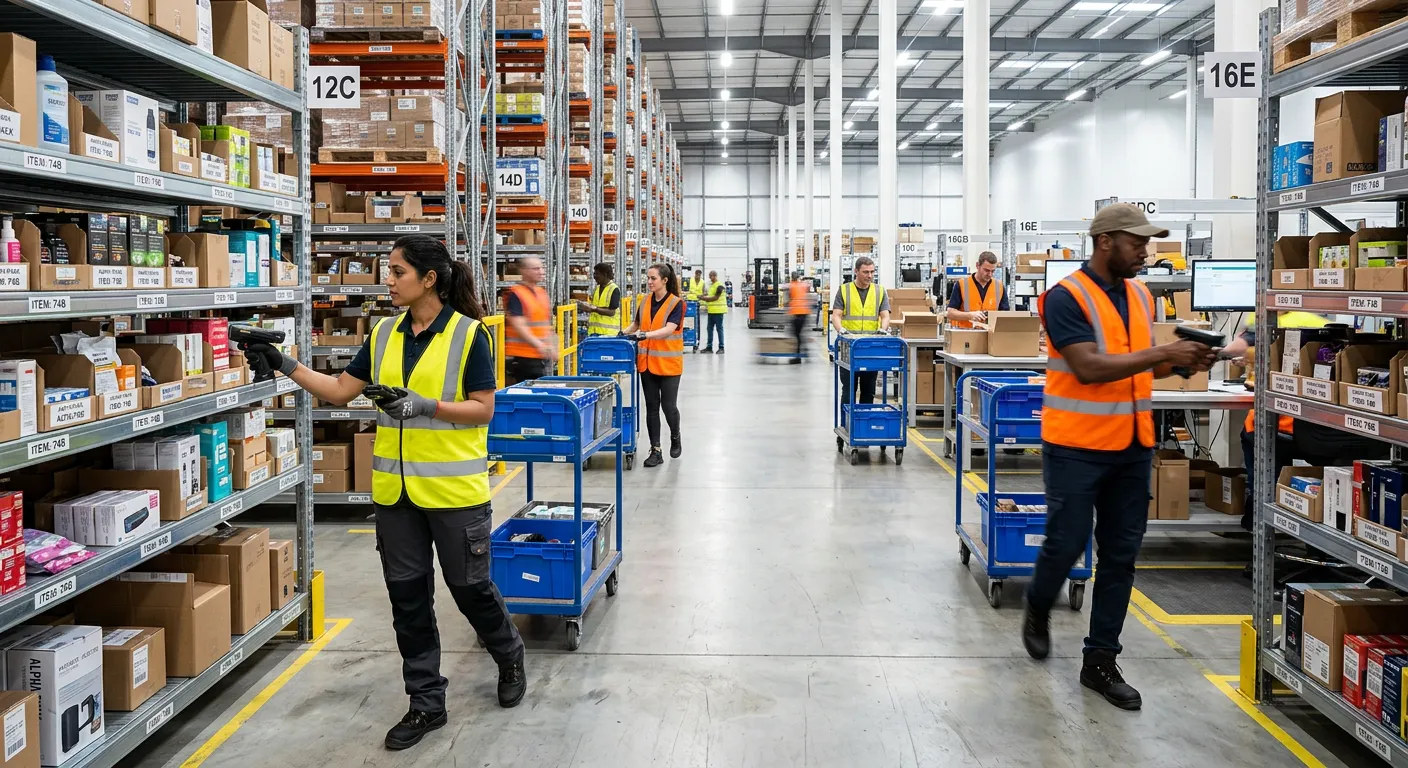
In today's fast-paced e-commerce landscape, the efficiency of your pick and pack warehouse directly impacts customer satisfaction and your bottom line. This comprehensive guide explores the strategies, technologies, and staffing solutions that transform a standard warehouse into a high-velocity fulfillment powerhouse.
Mastering Your Pick and Pack Operations
Explore the core components of a modern pick pack warehouse through our interactive guide below.
Core Picking Methodologies for Peak Efficiency
Choosing the right picking strategy is foundational. The batch picking method groups multiple orders together, allowing a worker to pick all items for a zone in one trip, drastically reducing travel time. This is ideal for high-volume, small-item fulfillment common in e-commerce.
Zone picking assigns workers to specific areas of the pick and pack warehouse. Orders move through these zones via conveyor or cart, allowing for specialization and reduced congestion. For complex, single-line orders, discrete order picking, where one picker handles one order from start to finish, offers simplicity and accuracy, though at a higher cost per pick.
Pro-Tip: Hybrid Models
The most advanced warehouses often employ a hybrid model. For instance, use batch picking for fast-moving consumer goods during a morning shift, and switch to discrete picking for high-value, fragile items in the afternoon. This flexibility maximizes both throughput and care.
Leveraging Technology in Your Pick Pack Warehouse
Modern Warehouse Management Systems (WMS) are the brain of the operation. They optimize pick paths in real-time, manage inventory levels to prevent stockouts, and integrate directly with your e-commerce platforms. Without a robust WMS, even the best physical layout will underperform.
Handheld RF scanners and mobile computers have become standard, but the frontier now includes wearable ring scanners and smart glasses that display pick information directly in the worker's field of view, keeping hands free and further speeding up the process. For larger facilities, automated guided vehicles (AGVs) and autonomous mobile robots (AMRs) are transforming goods-to-person systems, reducing human travel fatigue.
Building a High-Performance Warehouse Team
The most advanced technology fails without a skilled, reliable team. Staffing a pick pack warehouse requires a strategic approach. For consistent, high-volume needs, a core of permanent Warehouse Operatives provides stability and deep process knowledge.
To handle seasonal peaks, such as Black Friday or holiday rushes, partnering with a specialist agency for Immediate Start Warehouse Staff is crucial. This flexibility prevents bottlenecks and maintains service level agreements (SLAs). Effective training programs that cover safety protocols, equipment handling (like pallet jacks), and the specific WMS software are non-negotiable for maintaining a safe and efficient environment.
Pro-Tip: Cross-Training
Cross-train your staff in both picking and packing roles. This not only builds a more resilient team that can adapt to demand shifts but also fosters employee engagement by reducing monotony. It’s a strategy we also recommend in sectors like hospitality Front of House roles for the same reasons.
Key Benefits of an Optimized Pick Pack Warehouse
Dramatically Increased Throughput
Streamlined processes and smart technology can double or triple the number of orders processed per hour. Efficient pick paths, batch processing, and reduced error rates mean faster order cycle times from click to dispatch.
Enhanced Order Accuracy
Barcode scanning, pick-to-light systems, and robust WMS software virtually eliminate mis-picks and mis-ships. High accuracy directly translates to reduced return rates, lower costs, and significantly improved customer trust and loyalty.
Scalable & Flexible Workforce
A well-designed pick and pack warehouse operation can scale up or down seamlessly with demand. By leveraging a mix of permanent staff and vetted temporary workers from specialized agencies, you can maintain service levels during unpredictable sales spikes without incurring fixed overheads during quieter periods.
The Anatomy of a Modern Pick and Pack Warehouse
1. Receiving & Put-Away: The Critical First Step
Efficiency begins before the first item is picked. A disciplined receiving process involves immediate verification of shipment against purchase orders, rapid barcode labeling, and systematic put-away to predetermined locations dictated by the WMS. Slotting optimization—placing fast-moving items in the most accessible"golden zone" (between knee and shoulder height)—can cut picking time by up to 20%. This principle of logical placement is as vital in a warehouse as it is in a professional kitchen, where mise en place dictates service speed.
Cross-docking is an advanced strategy where incoming goods are immediately sorted and transferred to outbound shipping lanes, bypassing storage entirely. This is highly effective for time-sensitive, high-turnover products and requires exceptionally coordinated labor, similar to the precision needed for event set-up and break-down crews.
2. The Picking Process: Where Strategy Meets Execution
Beyond the methodology, the physical execution is key. Cart-based picking allows for larger batch sizes. Tote-based systems work well with sortation conveyors. Voice-picking technology, where workers receive instructions via headset, allows for eyes-free, hands-free operation, boosting both safety and speed in low-light or freezer environments. The key performance indicators (KPIs) here are lines picked per hour and pick accuracy rate. Regular performance reviews and incentives aligned with these KPIs keep the team motivated and focused.
3. The Packing Station: The Final Quality Gateway
Packing is not merely placing items in a box. It's a balance of cost, protection, and customer experience. Modern packing stations are equipped with on-demand box-sizing machines that create the right-sized carton in seconds, eliminating wasted void fill and reducing shipping costs—a major expense for e-commerce businesses. The station should also have efficient access to a range of packaging materials: air pillows, bubble wrap, and biodegradable alternatives.
A final visual check and scanning of the shipping label are imperative. Integrating carrier software directly into the WMS allows for automatic label printing and manifest generation, streamlining the handover to couriers. The attention to detail required here mirrors that of a hotel housekeeping team ensuring every room is perfectly presented.
4. Shipping & Dispatch: The Last-Minute Sprint
The dispatch area must be organized for rapid sorting by carrier and service level (e.g., next-day, economy). Load consolidation for regional hubs can further drive down costs. Real-time tracking integration provides visibility for both the warehouse manager and the end customer. The physical demands and logistical coordination of this stage are significant, requiring staff who are as robust and reliable as those found in general warehouse operations across the UK.
Frequently Asked Questions: Pick Pack Warehouse Operations
Get expert answers to the most common questions about optimizing your pick and pack warehouse and staffing it effectively.
For most SMEs, batch picking combined with a simple, zone-based layout offers the best balance of efficiency and upfront cost. Start with cart-based batch picking in clearly marked aisles. Invest in reliable handheld scanners paired with a cloud-based WMS. This setup reduces travel time significantly compared to single-order picking and doesn't require the massive capital investment of full automation. As volume grows, you can then layer in technologies like put-to-light or explore goods-to-person robotics.
Error reduction is multi-faceted. First, enforce a strict scan-confirm policy—every item must be scanned before it goes into the tote. Second, improve warehouse signage and bin labeling; locations should be unambiguous. Third, implement regular cycle counts to ensure the WMS data matches physical inventory. Fourth, provide thorough, ongoing training and create a culture where accuracy is valued as highly as speed. Finally, consider pick-to-light or voice-picking systems, which provide a second sensory confirmation (visual/auditory) and drastically cut errors.
The primary challenges are high turnover, seasonal demand fluctuations, and finding workers with the right mix of physical stamina and tech aptitude. To combat turnover, focus on creating a positive work environment: fair pay, clear progression paths, recognition programs, and ergonomic equipment. For demand fluctuations, build a partnership with a reputable recruitment agency that specializes in immediate start warehouse roles. They can provide pre-vetted temporary staff at short notice. To attract better talent, highlight technology use in your job ads—modern workers are often more engaged when they work with advanced tools like scanners and robotics.
Automation is a significant investment, so timing is key. Consider it when: 1) Labor costs are consistently rising and becoming a major portion of your operational expense. 2) You're hitting physical space or throughput limits with your current manual system. 3) Order accuracy issues persist despite process improvements. 4) You have highly repetitive, predictable picking patterns (e.g., same SKUs daily). Start with a cost-benefit analysis, focusing on Return on Investment (ROI). Often, a modular approach works best—automate one high-volume zone first, like a robotic goods-to-person system for your top 20% of SKUs, before a full warehouse overhaul.
Ready to Transform Your Pick Pack Warehouse?
Optimizing your pick and pack warehouse requires the right strategy, the right technology, and most importantly, the right people. Whether you need to build a core team of skilled Pickers and Packers or require a flexible workforce to manage peak seasons, strategic staffing is the linchpin of success.
Don't let staffing shortages or high turnover slow down your fulfillment engine. Partner with experts who understand the unique demands of modern warehouse logistics and can connect you with reliable, motivated talent.
From Acton to Windsor, and across the UK, we provide the talent that drives logistics forward.
Real-World Impact: A Case Study in Optimization
Theory is one thing, but tangible results are what drive business decisions. Consider the case of"SwiftGoods," a mid-sized UK e-commerce retailer specializing in homeware. Facing 30% annual growth, their manual pick and pack warehouse was becoming a bottleneck, with order cycle times stretching to 48 hours and error rates hovering at 2.5%.
The Challenge
- Over-reliance on discrete paper-based picking.
- Inefficient layout causing excessive travel.
- High seasonal turnover straining training resources.
- Inability to scale for peak holiday demand.
The Solution
- Implemented a cloud-based WMS with optimized pick paths.
- Adopted a hybrid batch-and-zone picking model.
- Partnered with a specialist agency for a core permanent team and a flexible temp pool.
- Introduced scan-verify at every stage.
The Results (12 Months)
- Order cycle time reduced by 40% to under 18 hours.
- Picking errors fell to 0.4%, saving £45k annually in returns.
- Throughput increased by 130% without expanding footprint.
- Staff turnover decreased by 25% due to clearer processes and better support.
This transformation underscores that optimization isn't a single change but a synchronized overhaul of process, technology, and people. The strategic staffing partnership was particularly crucial, providing not just bodies, but trained personnel who could integrate quickly, much like the seamless support needed in office support functions.
Beyond the Basics: The Next Wave of Warehouse Tech
While WMS and scanners are now table stakes, the next generation of technology is reshaping the pick and pack warehouse landscape. These solutions focus on predictive analytics, augmented reality, and sophisticated robotics.
Predictive Analytics & AI-Driven Slotting
Modern systems no longer just react; they predict. Advanced WMS platforms use machine learning algorithms to analyze historical sales data, seasonal trends, and even weather forecasts to dynamically re-slot inventory. For example, a spell of cold weather might automatically prompt the system to suggest moving hot water bottles and blankets to faster-picking forward pick faces. This constant optimization ensures the"golden zone" is always occupied by the items most likely to be picked next, a level of dynamic planning that exceeds even the most detailed kitchen prep list.
Furthermore, AI can predict equipment maintenance needs and potential bottlenecks before they occur, shifting labor resources preemptively to maintain flow. This predictive staffing is akin to having a perfectly timed event crew arrive just as their specific phase begins.
Augmented Reality (AR) for Picking & Training
Smart glasses and AR are moving from pilot projects to practical tools. A picker wearing AR glasses sees a digital overlay in their field of view: glowing arrows on the floor for the optimal path, highlighted bin locations, and a digital checklist of items and quantities. This hands-free, eyes-up technology not only boosts speed but dramatically improves safety by keeping the worker's focus on their environment. For training, AR can simulate the picking process for new hires, allowing them to learn in a virtual replica of the warehouse without pressure, reducing onboarding time by up to 50%.
Collaborative Robotics (Cobots)
Unlike large, caged industrial robots, collaborative robots are designed to work safely alongside humans. In a pick pack warehouse, cobots can be deployed for repetitive, physically taxing tasks like transporting heavy totes from picking zones to packing stations. A"follow-me" cobot cart, for instance, can trail a picker, carrying completed batches and freeing them from pushing heavy carts. This reduces physical fatigue, minimizes risk of injury, and allows human workers to focus on the more complex tasks of identifying, verifying, and handling items—where human dexterity and judgment are superior.
The integration of cobots represents a shift from automation replacing labor to automation augmenting it, creating more engaging and less strenuous roles that can attract a wider talent pool.
The Green Warehouse: Efficiency Meets Sustainability
Optimization isn't just about speed and cost; it's increasingly about environmental impact. A modern pick and pack warehouse has a significant opportunity to reduce its carbon footprint, which also resonates with eco-conscious consumers and can lead to substantial cost savings.
Packaging Optimization & Waste Reduction
On-demand box-making machines (right-sizing) are a prime example of green technology with a direct ROI. By eliminating wasted cardboard and void fill, businesses not only save on material costs but also dramatically reduce shipping costs due to lower dimensional weight. Furthermore, offering customers the option to combine orders into fewer shipments, and stocking a range of recycled and biodegradable packaging materials, turns the packing station into a hub of sustainability. The meticulous attention required here parallels the conscientiousness of a housekeeping team managing linen reuse programs.
Energy Management & Smart Facilities
LED lighting with motion sensors can cut energy use by over 60% in a warehouse. Smart HVAC systems and high-speed dock doors that minimize air exchange further reduce energy consumption. Some forward-thinking facilities are installing solar panels on vast roof spaces, turning the warehouse from an energy consumer into a partial producer. Efficient warehouse design also contributes—an optimized layout that reduces travel distance for workers and machines inherently uses less energy.
The Talent Connection
Sustainability is also a powerful recruitment and retention tool. Today's workforce, particularly younger generations, increasingly seeks employers with strong environmental and social governance (ESG) credentials. Promoting your warehouse's green initiatives—from recycling programs to energy-efficient tech—can make roles more attractive and help build a proud, committed team, just as a strong company culture does in front-of-house roles.