


Strike Replacement Buses: Hire Rapid Transport Crews and Strategic Staffing Solutions UK for Disruption-Proof Operations
SEO Title: Strike Replacement Buses Hiring Guide | Strategic Staffing Solutions UK Rapid Crews
SEO Description: Hire strike replacement buses, drivers, depot staff, and passenger-facing teams through Strategic Staffing Solutions UK. Discover compliance, fast mobilisation, and disruption-proof workforce planning for transport operations.
When industrial action threatens transport continuity, organisations need more than contingency paperwork. They need Strike Replacement Buses supported by trained drivers, depot coordinators, compliance leads, and customer-facing staff who can deploy quickly. A resilient response depends on rapid mobilisation, clear operational governance, and access to a vetted temporary workforce. This guide explains how transport providers, councils, private contractors, and public-sector teams can plan staffing for strike replacement buses while maintaining safety, service quality, and regulatory confidence.
Interactive Overview: Where Strike Replacement Bus Staffing Is Used
Strike replacement bus operations are not a single job type. They combine emergency transport, fleet management, compliance oversight, and passenger service. Explore the categories below to understand how staffing priorities shift depending on the disruption scenario.
Emergency Transport
Emergency scenarios require immediate availability of licensed drivers and relief staff. When rail, tram, or bus services are disrupted, replacement buses may need to operate across unfamiliar routes, extended hours, and shifting timetables. Staffing partners should maintain a pool of drivers who can be contacted within hours, verified against licence status, and matched to route complexity.
The fastest response is not simply “hiring more drivers.” It is hiring the right drivers with the right endorsements, route awareness, and professional conduct. For organisations building a temporary staffing solutions plan, emergency transport staffing should include tiered response levels: immediate cover, next-day mobilisation, and planned surge capacity.
Depot & Fleet Operations
Strike replacement buses depend heavily on depot discipline. Drivers need vehicles, route sheets, defect reports, refuelling plans, and shift instructions. Depot coordinators, mechanics, cleaners, and marshalling staff become critical when operations are under pressure. A poorly supported depot can create delays, safety risks, and reputational damage even when enough buses are available.
Strong dynamic workforce solutions treat depot staffing as part of the transport network, not a back-office function. This means scheduling staff for early starts, late returns, overnight security, and rapid vehicle turnaround while maintaining safe working practices.
Passenger Service Continuity
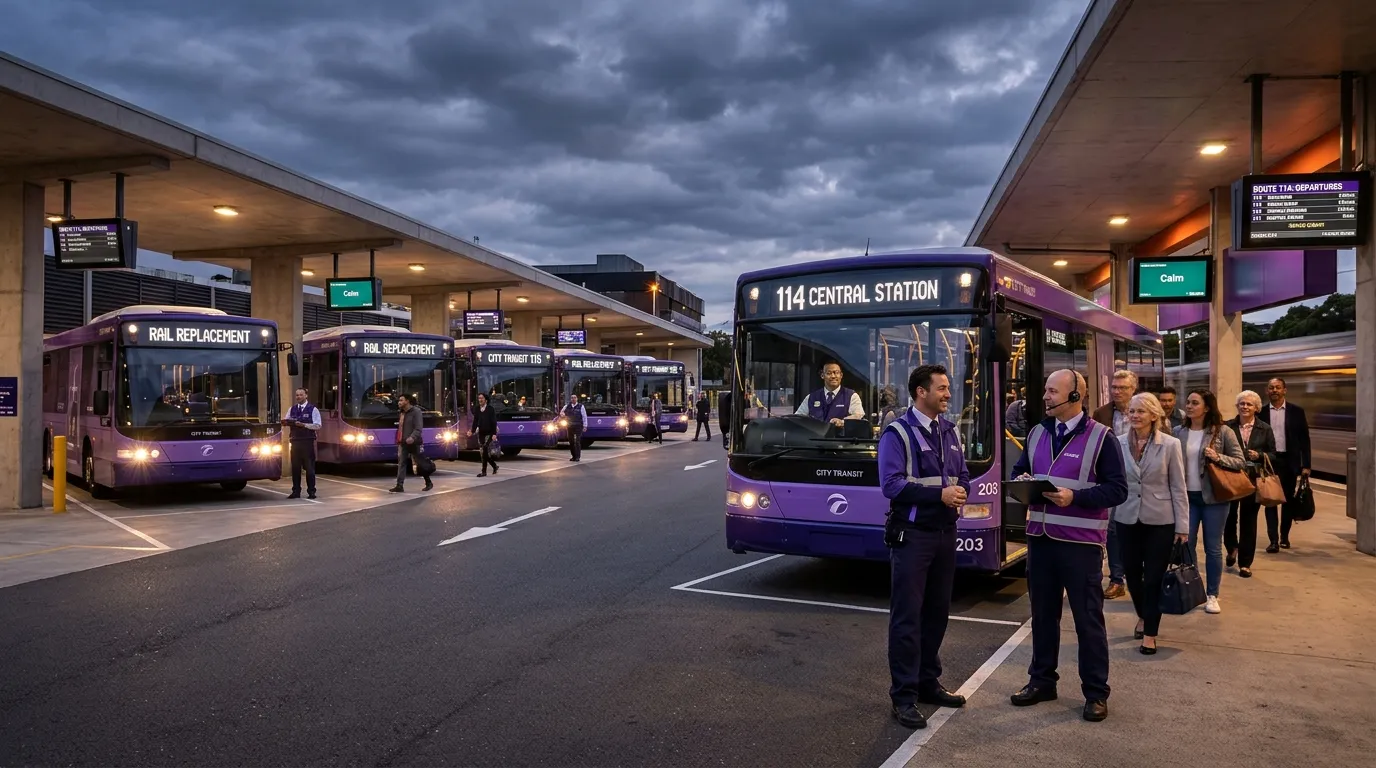
During disruption, passenger expectations change. People are confused, anxious, and often travelling unfamiliar routes. Drivers, bus station staff, customer service representatives, and information marshals play a visible role in calming situations. Strike replacement buses are only successful if passengers can understand where to go, when services arrive, and what alternatives are available.
Staff should be briefed not only on timetables but on communication tone. A replacement bus driver who can explain delays clearly reduces complaints and improves safety. This is especially important for schools, hospitals, care homes, and essential workers relying on public transport.
Compliance & Safety
Transport disruption does not relax regulatory standards. Operators must still manage driver hours, vehicle condition, licensing, insurance, safeguarding, and health and safety obligations. Inadequate vetting can create legal exposure, service suspension, or public confidence loss.
Effective staffing for Strike Replacement Buses requires documented checks, auditable records, and a clear chain of responsibility. Whether using agency drivers, subcontracted crews, or internal staff, every person operating or supporting a bus service must have verified competence and current compliance status.
Key Benefits of Planning Strike Replacement Bus Staffing Early
Faster Mobilisation
Pre-vetted staff reduce response time. When strike action is announced, operators can activate drivers, supervisors, and depot personnel without repeating lengthy onboarding steps.
Lower Operational Risk
Structured staffing plans prevent unsafe shifts, licence gaps, and incomplete vehicle checks. Clear accountability protects passengers, employees, and the operator.
Better Public Confidence
Consistent, professional crews reassure passengers. Reliable replacement buses become a visible signal that disruption is being managed responsibly.
About Strike Replacement Buses
Strike Replacement Buses are temporary transport services deployed when normal public transport operations are interrupted by industrial action, labour shortages, vehicle unavailability, or emergency disruption. They are commonly used by local authorities, transport operators, schools, hospitals, construction firms, and private contractors that need to maintain essential movement while core services are unavailable.
The buses themselves are only one part of the solution. The real operational challenge is staffing. A replacement service may require additional drivers, relief staff, depot support, cleaners, security personnel, customer information officers, supervisors, and compliance coordinators. This is where a workforce partner such as Strategic Staffing Solutions UK becomes valuable. The objective is not simply to fill shifts, but to create a temporary transport operation that is safe, compliant, predictable, and credible under public scrutiny.
Why Strike Replacement Buses Need Specialist Staffing
Hiring for disruption is different from routine recruitment. Strike conditions create compressed timelines, unpredictable shift patterns, and heightened public visibility. Drivers may need to operate unfamiliar routes, work split shifts, or cover multiple depots. Supervisors may need to manage staff who have never worked together before. In these circumstances, general recruitment methods often fail because they are too slow and too broad.
Specialist staffing partners understand transport compliance, temporary work regulations, and the practical pressures of emergency operations. They know that a bus driver’s licence alone is not enough. They also check CPC validity, right-to-work status, driving endorsements, vehicle category compatibility, safeguarding considerations where relevant, and previous experience with replacement or emergency services. This level of screening is what separates a temporary stopgap from a reliable operational plan.
Pro Tip
Build a standby pool before disruption is announced. Even a small group of pre-checked drivers and depot staff can reduce mobilisation time by days. Organisations that wait until strike action is confirmed often face higher costs, lower candidate quality, and incomplete compliance records.
Roles That Keep Strike Replacement Buses Moving
A successful replacement bus operation is a system, not a single job title. Staffing requirements should be mapped across the full service lifecycle. Below are the most common roles that should be considered in a disruption staffing plan.
- 01
Bus Drivers and Relief Drivers: Licensed PCV or equivalent drivers are the core requirement. Relief drivers are essential because shifts may extend, routes may change, and unplanned absence can occur quickly.
- 02
Depot Coordinators: These staff manage vehicle allocation, shift briefings, defect reporting, refuelling, and turnaround times. They prevent bottlenecks when operations are under pressure.
- 03
Cleaners and Vehicle Hygiene Staff: Strike replacement buses often run at higher intensity. Cleanliness affects passenger confidence, especially on school, hospital, and commuter routes.
- 04
Security and Marshalling Staff: Crowded temporary services can create conflict. Marshals at key stops and security at depots help maintain order and protect staff.
- 05
Customer Information Officers: Staff at stations, schools, hospitals, or community hubs can guide passengers to replacement services and reduce confusion.
- 06
Supervisors and Compliance Leads: A named supervisor should oversee temporary staff, monitor working hours, ensure vehicle checks, and escalate incidents quickly.
Compliance, Safety, and Driver Vetting Standards
Transport operations are highly regulated, and strike replacement buses should not be treated as an exception. In fact, they often require stronger oversight because temporary staff may be unfamiliar with the operator’s systems. Employers should verify that all drivers hold valid licences for the relevant vehicle category, that Certificate of Professional Competence requirements are current, and that any endorsements or penalties are reviewed.
Beyond driver checks, operators must manage working time regulations, rest breaks, fatigue risk, and vehicle defect reporting. Temporary staff should receive a site-specific induction covering depot rules, emergency procedures, passenger conduct expectations, and incident escalation. If children or vulnerable passengers are transported, safeguarding checks may also be required.
Expert Insight
Ask staffing providers for an auditable compliance pack: licence verification, right-to-work evidence, CPC confirmation, insurance status, induction records, and shift assignment logs. This documentation is not bureaucracy. It is operational protection.
Planning and Forecasting for Transport Disruption
Effective planning begins before a strike is announced. Operators should model likely scenarios: a one-day disruption, a week-long action, a partial network failure, or an unplanned workforce shortage. Each scenario requires different staffing levels. A one-day event may need immediate relief drivers and depot cover. A longer disruption may require rota planning, fatigue management, and a reserve pool.
Forecasting should include route complexity, passenger volume, school or hospital dependency, and the availability of replacement vehicles. Staffing plans should also consider non-transport functions such as communications, customer care, and security. A comprehensive staffing solutions approach recognises that replacement buses create a temporary service ecosystem.
Operators should maintain a live staffing matrix showing which roles can be filled internally, which require agency support, and which need specialist verification. This matrix reduces panic and improves decision speed when disruption is confirmed.
Passenger Communication and Service Trust
Strike replacement buses succeed when passengers feel informed and respected. Confusion creates frustration, frustration creates conflict, and conflict creates safety risks. Staff should be briefed on the most likely passenger questions: where to board, which routes are affected, how long services take, what happens if a bus is delayed, and who to contact for assistance.
Communication should be consistent across social media, station notices, school letters, hospital notices, and on-board announcements. Temporary staff should receive a simple briefing pack with approved language and escalation instructions. This prevents mixed messages and protects the operator’s reputation.
Practical Tip
Include a one-page “Passenger Brief” for every temporary shift. It should list the route, key stops, expected delays, alternative transport, and the supervisor contact number. Small communication tools can prevent large service failures.
Technology and Real-Time Workforce Management
Modern disruption response benefits from digital coordination. Real-time rota boards, mobile shift confirmations, and instant driver availability updates reduce communication gaps. Operators can use technology to track which staff have been assigned, which shifts are unfilled, and which vehicles require support.
For employers searching for quick hire transport staff, digital visibility is essential. It allows supervisors to respond to absences, route changes, or vehicle defects without waiting for a phone chain. Even simple tools such as shared calendars, SMS alerts, and incident logs can improve reliability during a high-pressure strike period.
Cost Considerations for Strike Replacement Bus Staffing
Emergency staffing costs are often higher than planned recruitment, but poor planning can be more expensive. Late hiring can lead to overtime, premium agency fees, vehicle idle time, passenger complaints, and regulatory exposure. A balanced cost strategy includes a standby pool, negotiated rates, and clear terms for short-notice deployments.
Operators should also consider indirect costs: training, supervision, communications, security, cleaning, and incident management. The most cost-effective plan is one that reduces disruption duration and protects service continuity.
How to Hire Staff for Strike Replacement Buses
If you are responsible for transport continuity, start by defining the service scope: number of buses, routes, operating hours, passenger groups, and required vehicle types. Then map the staffing roles needed to support that scope. Avoid vague job requests such as “we need drivers.” Specify licence categories, shift patterns, depot locations, and whether staff will interact with vulnerable passengers.
Employers can look for staff through transport specialist agencies, local labour pools, and pre-vetted temporary frameworks. The best partners will provide not only candidates but also compliance documentation, induction support, and contingency cover.
Action Checklist
- • Confirm vehicle categories and driver licence requirements.
- • Build a standby pool of pre-checked drivers and depot staff.
- • Prepare induction packs and compliance documentation.
- • Assign supervisors and create an escalation process.
- • Draft passenger communication templates before disruption.
Video Insight: Fast Temporary Staffing in Practice
For transport managers and employers preparing for disruption, speed matters. This video explains how temporary staffing can be mobilised quickly while maintaining compliance and operational quality.
FAQ: Strike Replacement Buses and Temporary Transport Staffing
Prepare Your Transport Workforce Before Disruption Happens
Strike replacement buses require more than vehicles. They require a responsive, compliant, and experienced workforce. If you need drivers, depot staff, supervisors, or passenger-facing support, you can hire staff today through a rapid staffing framework designed for disruption.
Hire Staff Today