



Stock Clerk Meaning: The Essential Role in Modern Inventory & Warehouse Operations
Demystifying the core duties, skills, and career path of a Stock Clerk. Discover how this pivotal position drives efficiency for businesses across the UK and why hiring a skilled Crew Ag is vital for success.
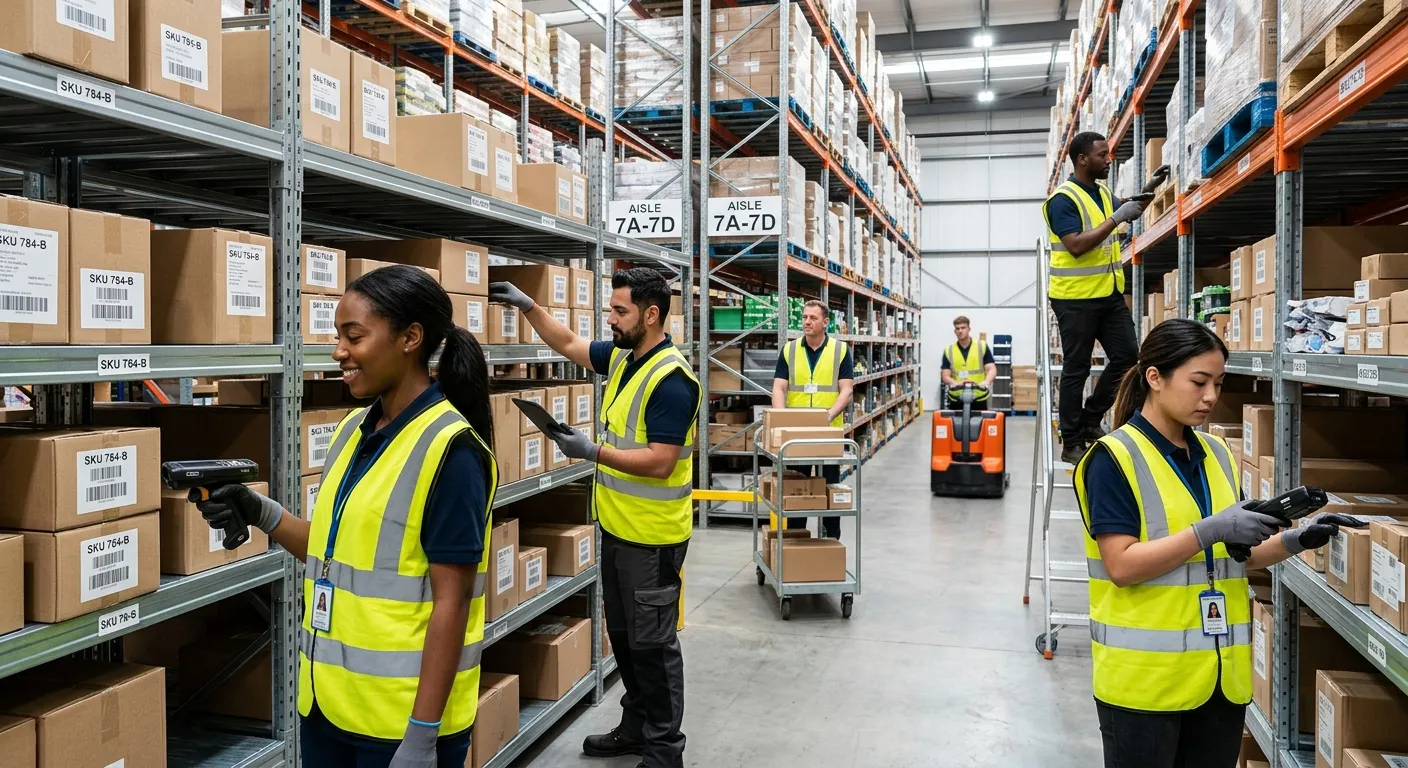
A Multi-Faceted Role: Stock Clerk Responsibilities Unveiled
The Day-to-Day Stock Clerk Meaning
At its heart, the Stock Clerk Meaning revolves around the meticulous management of inventory. This is not a passive role; it's an active, detail-oriented position that forms the backbone of supply chain operations for retailers, distributors, and manufacturers. A typical day involves a cycle of receiving, organizing, and dispatching goods.
- Receiving & Unloading: Checking incoming shipments against purchase orders, inspecting for damage, and accurately logging quantities.
- Stock Replenishment & Organization: Physically moving products to their designated shelves, bins, or pallet locations. This requires understanding warehouse layout and FIFO (First-In, First-Out) principles, especially crucial in sectors like catering or hospitality.
- Order Picking & Packing: Accurately selecting items from inventory to fulfil customer or store orders, preparing them for shipment. This role shares significant overlap with Pickers and Packers.
- Inventory Audits & Cycle Counts: Conducting regular physical counts to verify that the digital inventory records match the actual stock on hand, identifying discrepancies.
- Data Entry & System Management: Updating inventory databases (like SAP or Oracle) with every movement, ensuring real-time accuracy for sales and procurement teams.
The Skillset of a Top-Tier Stock Clerk
Beyond physical stamina, a successful stock clerk possesses a blend of hard and soft skills. Precision and reliability are paramount.
- Attention to Detail: A single mis-scan or incorrect log can cause costly inventory errors and fulfilment delays.
- Physical Fitness & Dexterity: The role involves lifting, bending, standing, and operating equipment like pallet jacks. It's as physically engaged as roles in Events Set-Up And Break-Down Crew.
- Basic Tech Proficiency: Comfort with barcode scanners, handheld RF devices, and inventory management software is now standard.
- Numeracy & Literacy: Strong basic math for counting and recording, and clear communication for logging issues and liaising with team leads.
- Organizational Skills: The ability to maintain order in a potentially chaotic environment, similar to the systematic approach needed in Housekeeping roles.
From Clerk to Coordinator: Career Progression
The stock clerk role is often a gateway into the logistics and supply chain industry. Demonstrating reliability, accuracy, and initiative can lead to rapid advancement.
A dedicated clerk can progress to Senior Stock Clerk, then to Inventory Control Specialist or Warehouse Supervisor. With further experience and possibly qualifications, one can move into Warehouse Management, Logistics Coordination, or Supply Chain Analysis. Many agencies, including ours, offer temporary staffing solutions that allow clerks to gain diverse experience across industries, accelerating this career path.
Why Stock Clerks Are Indispensable Across Industries
The need for precise inventory control transcends sectors. While commonly associated with retail warehouses, stock clerks are vital in:
- Healthcare: Managing medical supplies and pharmaceuticals, where accuracy is critical.
- Hospitality: Controlling linen, amenity, and food & beverage stock for hotels and resorts, working closely with Housekeeping Staff and Front of House teams.
- Manufacturing: Handling raw materials and component parts for production lines.
- E-commerce Fulfilment Centres: The engine room of online retail, where speed and accuracy directly impact customer satisfaction.
The Business Value of a Skilled Stock Clerk Crew Ag
Investing in professional stock handling isn't an expense; it's a direct contributor to operational excellence and profitability. Here’s how a proficient team delivers ROI.
99.9% Inventory Accuracy
Eliminate costly stockouts and overstocking. Precise clerks ensure your system data reflects reality, enabling better purchasing decisions and preventing lost sales or wasted capital tied up in excess inventory. This level of control is as crucial as it is in specialized warehouse recruitment.
Accelerated Order Fulfilment
A well-organized warehouse with a skilled clerk team dramatically reduces pick, pack, and ship times. This leads to faster delivery promises, higher customer satisfaction, and the ability to handle greater order volumes without proportional increases in staffing, similar to efficiencies gained by hiring a dedicated Warehouse Assistant.
Enhanced Workplace Safety & Compliance
Proper stock handling prevents accidents. Trained clerks ensure aisles are clear, heavy items are stored safely, and hazardous materials are handled according to regulations. This reduces liability, insurance costs, and downtime from injuries, a principle equally applied when looking for staff in any operational role.
Hiring the Right Stock Clerk: A Strategic Guide
Understanding the Stock Clerk Meaning is the first step; the next is recruiting the right person. The market for reliable operational staff is competitive, especially in hubs like London. A strategic hiring process is essential.
Pro-Tip: Look Beyond the CV
A candidate's attitude, reliability, and willingness to learn are often more valuable than prior experience in a specific Warehouse Management System. Cultural fit and work ethic are paramount. This is why partnering with a specialist agency that understands the nuances of operational roles—from Warehouse Operatives to stock clerks—can save significant time and reduce hiring risk.
Consider whether your needs are permanent, temporary, or seasonal. For peak periods or specific projects, leveraging a temporary staffing solution can provide the flexibility to scale your Crew Ag up or down without long-term commitment.
Integration with Broader Operations
A stock clerk does not work in isolation. Their performance is intrinsically linked to other departments. Effective clerks communicate with:
- Procurement Teams: Flagging low stock levels to trigger timely reordering.
- Sales & Customer Service: Providing accurate stock availability to manage customer expectations.
- Finance: Supporting accurate inventory valuation for financial reporting.
- Facilities & Maintenance: Reporting issues with warehouse equipment or storage infrastructure.
This interconnectedness means that a hiring mistake in the stockroom can ripple through the entire business. It underscores why a rigorous recruitment process, possibly facilitated by experts in comprehensive staffing solutions, is a wise investment.
Frequently Asked Questions: Stock Clerk Meaning & Hiring
While there is significant overlap, the Stock Clerk Meaning typically emphasizes inventory control, data accuracy, and cycle counting. A Warehouse Operative's role is often broader, encompassing loading/unloading trucks, operating machinery like forklifts, and general material movement. A Clerk is deeply focused on the"bookkeeping" of physical stock. Many professionals, however, perform hybrid roles. You can explore specific Warehouse Operative jobs to see the range of duties.
Formal qualifications are often not mandatory. Employers primarily seek GCSEs (or equivalent) in Maths and English, along with the key skills outlined earlier: reliability, attention to detail, and physical capability. A forklift license (if required) or certification in manual handling can be advantageous. For candidates, gaining experience through temp jobs in London with an immediate start can be an excellent way to enter the field and build a track record.
A specialist agency pre-vets candidates for skills, attitude, and right-to-work status, presenting you with a shortlist of qualified individuals, often within 24-48 hours. They manage advertising, initial screening, and interviews, saving your HR or management team dozens of hours. They also understand market rates and can advise on competitive pay to attract the best Crew Ag. This is part of a modern dynamic workforce solution that prioritizes speed and quality.
Both are widely available. Permanent roles offer stability and are core to ongoing operations. Temporary or contract roles are extremely common, especially to cover seasonal peaks (e.g., Christmas), staff absences, or specific projects like stock takes or warehouse relocations. This flexibility benefits businesses needing to scale quickly and individuals seeking varied experience. Many agencies specialize in placing candidates in immediate start warehouse jobs across the UK.
Ready to Strengthen Your Inventory Operations?
Now that you fully understand the Stock Clerk Meaning and its critical value, it's time to act. Stop letting inventory inaccuracies and fulfilment delays cost your business money. Partner with experts who know how to source, vet, and place the reliable, detail-oriented talent your warehouse needs.
We provide tailored staffing solutions across sectors, from hospitality and events to warehouse and cleaning. Let's build your ideal Crew Ag.
Stock Clerk Salaries & UK Market Trends: What to Expect
Understanding the compensation landscape and evolving market demands is crucial for both employers setting competitive rates and candidates planning their careers.
Entry-Level & Average Salaries
Starting salaries for Stock Clerks in the UK typically range from £18,000 to £22,000 per annum. With 2-5 years of experience, this can rise to an average of £24,000 to £28,000. These figures vary significantly by region, with London and the South East commanding premiums of 15-20% due to higher living costs.
Pay is also influenced by sector specialisation. Clerks handling high-value goods (e.g., pharmaceuticals, electronics) or working in automated, high-throughput e-commerce fulfilment centres often earn more. Overtime, especially during peak seasons, can substantially boost take-home pay.
The Skills Premium
Basic proficiency with inventory software is now a baseline expectation. However, clerks with demonstrable expertise in specific Enterprise Resource Planning (ERP) systems like SAP WM, Oracle Netsuite, or Microsoft Dynamics AX/365 can command salaries £3,000-£5,000 higher.
- Forklift Licences (Counterbalance, Reach): Adds £1,500-£2,500 to earning potential.
- Knowledge of Lean/Warehouse Management Principles: Understanding of 5S, Kaizen, or Six Sigma is highly valued in progressive logistics firms.
- Bilingual Ability: In multicultural hubs like London, language skills relevant to your workforce or customer base are a tangible asset.
The Rise of the"Tech-Enabled" Clerk
The role is undergoing a quiet revolution. Beyond barcode scanners, clerks are increasingly interacting with:
- Wearable Technology: Smart glasses and ring scanners for hands-free picking.
- Robotic Process Automation (RPA): Software 'bots' that handle repetitive data entry, freeing clerks for more complex tasks.
- IoT Sensors & Smart Shelves: Automating real-time stock level alerts.
This shift means adaptability and continuous learning are no longer optional. Employers seeking a future-proof Crew Ag should prioritise candidates with a growth mindset towards technology.
Case Study: Transforming a Hospitality Supplier's Stock Chaos
A real-world example of how investing in skilled stock management resolved critical business issues.
The Challenge
A mid-sized supplier of linens and amenities to London hotels faced chronic issues: frequent stockouts of popular items, coupled with overstocking of slow-moving goods. Their annual stock take was a 3-day nightmare, revealing discrepancies of up to 12%. This led to:
- Angry hotel clients receiving incomplete orders.
- Emergency premium-rate courier charges to fulfil missing items.
- Capital trapped in obsolete stock, affecting cash flow.
- Low staff morale due to constant"fire-fighting".
Their warehouse relied on a small, overstretched team without clear processes or a dedicated clerk focused on inventory control.
The Solution & Role of the Stock Clerk
The company partnered with a recruitment agency to hire two experienced Stock Clerks on a permanent basis and brought in a third on a temporary contract to assist with the initial process overhaul. The clerks' first actions were:
- Physical Stock Reconciliation: A complete, wall-to-wall count to establish a true baseline.
- Zoning & Labeling: Implementing a logical storage system aligned with pick rates.
- Process Implementation: Enforcing strict procedures for receiving, put-away, and picking, including mandatory system updates after every transaction.
- Cycle Counting Schedule: Moving from one annual stock take to weekly cycle counts of specific product categories.
- Supplier Communication: Proactively flagging discrepancies with incoming shipments within 24 hours.
The Quantifiable Results
- Inventory Accuracy: Improved from 88% to 99.5% within 6 months.
- Order Fulfilment Accuracy: Rose to 99.9%, virtually eliminating costly redeliveries.
- Obsolete Stock: Reduced by 40% through better demand analysis enabled by accurate data.
- Staff Productivity: Pick rates increased by 25% due to an organised warehouse layout.
"The investment in a dedicated, skilled Stock Clerk team was the single most effective operational decision we made last year. They turned our biggest liability—inventory—into a reliable asset."
— Operations Director, London-Based Hospitality Supplier
The Future of the Stock Clerk Role: Automation, AI, and Strategic Value
Will automation replace Stock Clerks? The more pertinent question is: how will the role evolve to work alongside new technologies?
Tasks Being Augmented by Technology
Repetitive, predictable tasks are prime candidates for automation. This isn't elimination, but elevation of the clerk's role.
-
Automated Guided Vehicles (AGVs) & Mobile Robots
These handle the long-distance movement of pallets or carts between zones. The clerk's role shifts to supervising these systems, managing exceptions, and handling the complex de-palletising and precise shelf-stocking that robots still struggle with.
-
Computer Vision for Receiving
AI-powered cameras can count and identify items on a receiving dock faster than a human. The clerk becomes the validator, investigating discrepancies flagged by the AI and handling damaged or non-conforming goods.
-
Predictive Analytics for Stocking
AI models predict demand surges. The clerk acts on these insights, proactively reorganising the warehouse layout or creating pre-picked kits for anticipated orders, moving from reactive to proactive inventory management.
Enduring Human-Centric Skills & Future Challenges
The human element will remain irreplaceable in key areas, presenting both opportunities and challenges for the future Crew Ag.
-
Problem-Solving & Exception Handling
Machines fail, shipments are incorrect, and items get damaged. The clerk's ability to assess a non-standard situation, troubleshoot, and implement a solution is invaluable.
-
Cross-Functional Communication
As the"eyes and ears" of the warehouse, translating physical stock issues into actionable insights for procurement, sales, and finance will become even more critical.
-
The Cybersecurity Frontier
With increased connectivity, clerks must be trained in basic cyber hygiene. A phishing email that compromises their inventory login credentials could allow fraudulent stock movements or data theft, making them a new frontline in operational security.
The future Stock Clerk will be less of a manual labourer and more of a technology-savvy inventory analyst and floor controller. This evolution makes strategic hiring and ongoing training more important than ever. Businesses must view their Crew Ag not as a cost centre, but as a hybrid human-tech asset that ensures automation delivers its promised ROI.