



The Anatomy of a High-Performing Web Page: Beyond the Basics
While a clean structure and clear headings are foundational, truly exceptional web content is built on layers of strategic detail. A high-performing page doesn't just inform; it engages, convinces, and guides the user through a seamless journey. This requires a deep understanding of user intent, which can be categorized into four main types: Informational (seeking knowledge), Navigational (looking for a specific site/page), Commercial Investigation (researching before a purchase), and Transactional (ready to buy or convert). Your content must align precisely with the intent behind the search query that brought the user to your page.
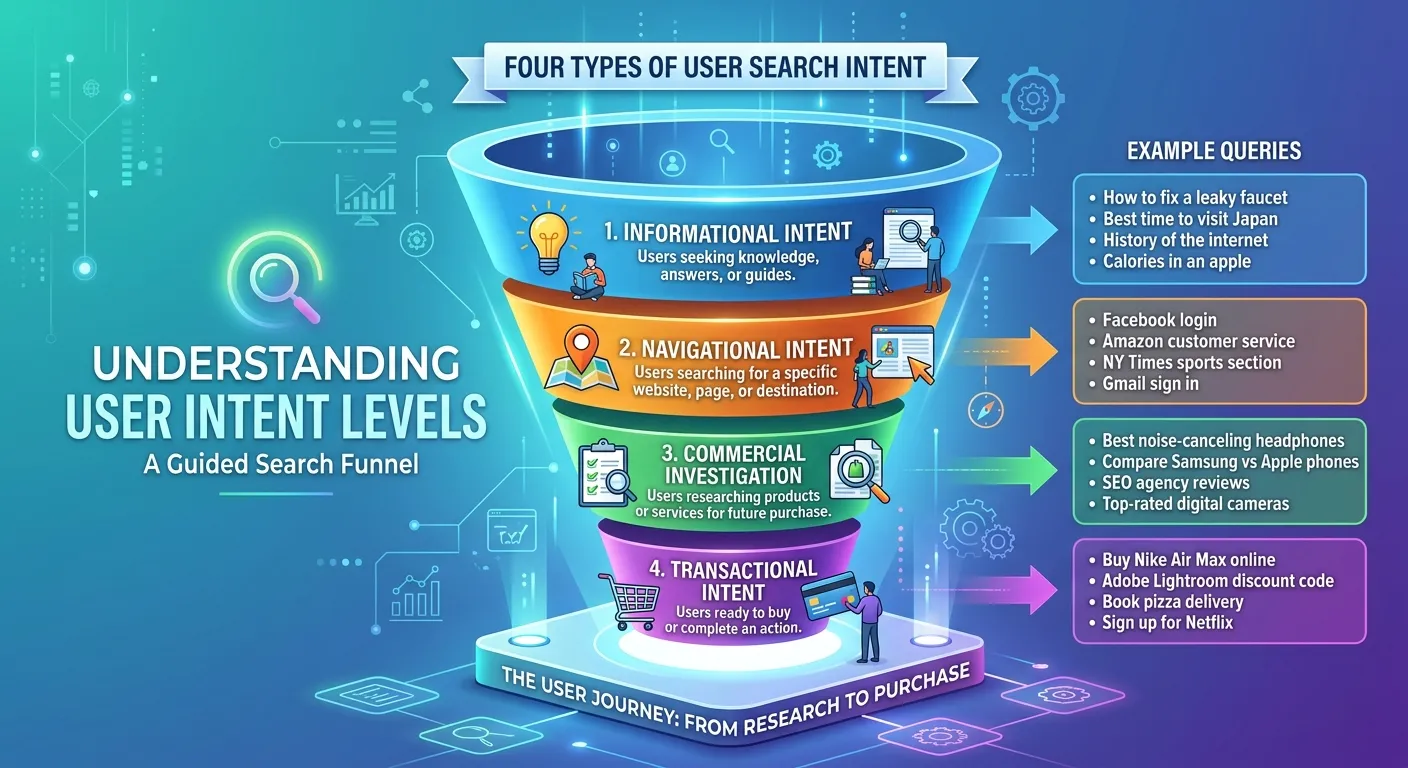
For instance, a page targeting"best noise-cancelling headphones 2024" must satisfy commercial investigation intent. It should provide detailed comparisons, feature breakdowns, pros and cons, and price ranges—not just a list of products. It should help the user in their research phase, building trust and positioning your brand (or your reviewed products) as authoritative. Failing to match intent is a primary reason for high bounce rates, as users don't find what they expected.
Mastering the Art of Semantic SEO and Topic Clusters
Modern SEO has moved far beyond simple keyword stuffing. Search engines like Google now use sophisticated natural language processing (NLP) models to understand the context and semantic relationships between words. Your content must demonstrate topical authority by covering a subject comprehensively. This is best achieved through the topic cluster model.
In this model, you create a single, comprehensive"pillar page" that provides a broad overview of a core topic (e.g.,"Complete Guide to Digital Marketing"). Then, you create multiple, more specific"cluster pages" that delve into subtopics (e.g.,"SEO Basics,""Email Marketing Strategies,""Social Media Advertising") and link back to the pillar page. This creates a silo of content that signals to search engines your deep expertise on the subject.
Implementing Latent Semantic Indexing (LSI) Keywords Naturally
LSI keywords are conceptually related terms that help search engines understand your content's depth. For a page about"organic gardening," LSI keywords might include"compost,""heirloom seeds,""companion planting,""pest control," and"soil pH." Weaving these terms naturally throughout your text—in headings, body copy, and image alt text—creates a rich semantic field. This doesn't mean forcing them in; it means writing so thoroughly about a topic that these terms emerge organically. Tools like SEMrush's"Topic Research" or AnswerThePublic can help identify these related concepts and questions.
Case Study: How"BakeCraft" Increased Organic Traffic by 150% with Pillar Content
BakeCraft, a mid-sized blog focused on home baking, was struggling with fragmented traffic. They had hundreds of isolated posts on recipes like"chocolate chip cookies" and"banana bread," but were ranking poorly for broader, high-value terms. Their strategy shifted to building topic clusters.
Action Taken: They identified"Sourdough Bread" as a high-opportunity pillar topic. They created an ultimate guide pillar page covering history, starters, baking techniques, troubleshooting, and tools. Then, they audited their existing blog posts, rewriting and enhancing posts like"Maintaining a Sourdough Starter" and"Achieving the Perfect Sourdough Crust" to link directly and contextually to the new pillar page. They also created new cluster content to fill gaps, such as"Sourdough for Gl-Free Diets" and"Comparing Dutch Ovens for Baking."
Result: Within six months, the"Sourdough Bread" pillar page became a top-3 result for that key term. More importantly, the internal linking structure distributed authority throughout the cluster, boosting rankings for all related subtopics. Overall organic traffic to the baking techniques section increased by 150%, and average time on page rose by 40%, indicating highly engaged users finding the comprehensive content they needed.
Advanced On-Page SEO: Technical Nuances That Matter
Beyond titles and meta descriptions, several on-page elements require meticulous attention:
- URL Structure: Keep URLs concise, readable, and include the primary keyword. Avoid long strings of numbers or parameters. A good example: `yoursite.com/digital-marketing/email-automation-flows`. A poor example: `yoursite.com/category2/article?id=5839`.
- Header Tag Hierarchy (H1-H6): Use a single, compelling H1. Structure your content logically with H2s for main sections and H3s/H4s for subsections. This creates an accessible outline for both users and search engine crawlers.
- Image Optimization: Every image is an SEO opportunity. Use descriptive filenames (e.g., `woman-using-laptop-home-office.jpg` not `IMG_1234.jpg`). Always fill out the `alt` attribute with a concise description that includes context and keywords where natural. Compress images to improve page load speed.
- Internal Linking Strategy: Link to other relevant pages on your site using descriptive anchor text. Avoid"click here." Instead, use text like"learn more about our content marketing services." This helps with crawlability, user navigation, and spreading page authority.
Engagement Metrics: Writing for Humans, Optimizing for Signals
Search engines use user behavior as a key ranking factor. High bounce rates, low time on site, and lack of engagement send negative signals. Your writing must captivate.
The"Inverted Pyramid" and The"BLUF" Method
For informational content, start with the conclusion (Bottom Line Up Front - BLUF). Give the most critical information in the first 100 words. This immediately satisfies the user's query and encourages them to read on for deeper detail. For commercial or persuasive pages, start with the core benefit or solution to the reader's pain point.
Enhancing Readability with Formatting
Large blocks of text are intimidating. Use:
- Short Paragraphs: 2-3 sentences maximum.
- Bulleted and Numbered Lists: Like this one, to break down complex information.
- Bold and Italic Emphasis: Sparingly, to highlight key takeaways or definitions.
- Pull Quotes or Call-Out Boxes: To visually highlight a crucial statistic or testimonial within the body text.
Including interactive elements like accordions for FAQs, embedded calculators, or short quizzes can dramatically increase time on page and provide a positive user experience, further boosting SEO value.
Leveraging Data and Original Research for Unbeatable Authority
In a sea of repetitive content, original data is king. Publishing unique research, surveys, or case studies makes your content inherently link-worthy and cements your site as an authoritative source. This is known as"skyscraper content"—content that is objectively better than anything else on the topic.
Example Process: If you're in the fitness niche, instead of writing another"top 10 workout tips" post, you could survey 1,000 personal trainers on"the most common form mistakes in squats," analyze the data, and publish the results with expert commentary and corrective exercise videos. This unique dataset becomes a primary source that other websites will reference and link to, building powerful backlinks.
Not every site can conduct large-scale surveys, but even small-scale original analysis can be powerful. For a local business, this could be a detailed case study with anonymized data showing how your service saved a client a specific amount of money or time, with concrete metrics and before/after scenarios.
The Critical Role of Content Maintenance and"Evergreen" Updates
Publishing content is not a"set it and forget it" task. Search engines favor fresh, accurate information. A robust content maintenance schedule is essential for sustained rankings.
Evergreen Content: This is content that remains relevant and valuable for years, though it still requires updates."How to Change a Tire" is an evergreen topic. To maintain its value, you should periodically update it with new images, tool recommendations, or notes on tire pressure monitoring systems (TPMS) found in modern cars.
Auditing and Refreshing: Conduct quarterly audits of your top-performing and key landing pages. Check for:
- Accuracy: Are statistics, links, and contact information current?
- Comprehensiveness: Can you add a new section, example, or FAQ based on recent developments or user questions?
- Performance: Has the page's ranking slipped? Updating the publication date (and making substantial additions) can signal freshness to search engines and often recovers lost traffic.
Google's"Query Deserves Freshness" (QDF) algorithm specifically looks for the most current information on trending or rapidly evolving topics. By regularly updating your content, you position yourself to capitalize on both evergreen and time-sensitive search traffic.
Conclusion: Synthesizing Strategy into Practice
Crafting web content that dominates search results and engages readers is a multifaceted discipline. It begins with a user-centric foundation built on clear intent, extends into a technically sound structure optimized for both crawlers and human eyes, and is elevated by strategic depth through topic clusters and original insight. Remember, the goal is to create a resource so valuable that it becomes the definitive answer to a searcher's question. By viewing your content as a living, evolving asset within a larger ecosystem—interlinked, updated, and measured—you move beyond simply writing words to building a sustainable digital authority that drives meaningful, long-term results. Start by auditing one key pillar topic in your domain, map its clusters, and deepen that content with the strategies outlined above. The cumulative effect of this disciplined approach is what transforms a simple webpage into your most reliable business asset.
Optimizing for Voice Search and Featured Snippets
The way users search is evolving rapidly with the proliferation of smart speakers and mobile assistants. Voice searches are typically longer, more conversational, and phrased as questions. To capture this traffic, your content must adapt. This also aligns perfectly with targeting featured snippets (position zero), as search engines often pull answers for voice queries from these highlighted results.
Strategy for Voice & Snippets: Structure your content to directly answer specific questions. Use a clear Q&A format with heading tags (H2, H3) that state the question plainly, such as"How do I start a sourdough starter?" Follow the heading with a concise, authoritative answer in the first 1-2 sentences. Then, elaborate further. Target question modifiers like"who,""what,""where,""why,""how," and"best." For instance, a page on noise-cancelling headphones should have sections titled"How does active noise cancellation work?" and"What are the best noise-cancelling headphones for flying?"
Furthermore, ensure your local business information is consistent across directories (Name, Address, Phone Number) for"near me" voice queries. Page speed is also critical for voice search, as these results are heavily prioritized for mobile users. A delay of even a second can eliminate your page from contention.
Psychological Triggers in High-Converting Content
Beyond information, high-performing content taps into fundamental psychological principles to build connection and drive action. Understanding these triggers allows you to craft narratives that resonate deeply and reduce friction in the user's journey.
- Social Proof: Integrate testimonials, user-generated content, client logos, and case study results directly into the body copy, not just in a sidebar. Mentioning that"Over 10,000 developers use this framework" or embedding a tweet from a satisfied customer within a tutorial builds instant credibility.
- Scarcity & Urgency (Used Ethically): For transactional pages, highlighting limited-time offers, low stock notifications, or closing enrollment dates can motivate decision-making. The key is authenticity—these must be real limitations, not fabricated ones.
- Storytelling (The Hero's Journey): Frame your case studies and problem-solution content as a narrative. The customer is the hero with a challenge (the pain point). Your brand provides the tools and guidance (the solution), leading them to success (the transformation). This structure is far more engaging than a dry list of features.
- Cognitive Ease: Use familiar analogies to explain complex topics. Comparing a website's CSS to the interior design of a house (structure vs. style) makes the concept immediately understandable. This reduces mental strain and increases the likelihood of content sharing.
Technical Deep Dive: Core Web Vitals and User Experience
Google's Core Web Vitals are a set of specific, user-centric metrics that are direct ranking factors. They measure the real-world loading performance, interactivity, and visual stability of your page. Exceptional content can be undermined by poor technical performance.
- Largest Contentful Paint (LCP): Measures loading performance. Aim for an LCP of 2.5 seconds or faster. This is primarily impacted by slow server response times, unoptimized images, and render-blocking resources. Use modern image formats (WebP) and consider a Content Delivery Network (CDN).
- First Input Delay (FID): Measures interactivity. Aim for an FID of 100 milliseconds or less. This is caused by heavy JavaScript execution. Break up long tasks, defer non-critical JavaScript, and use a web worker if necessary.
- Cumulative Layout Shift (CLS): Measures visual stability. Aim for a CLS of 0.1 or less. This annoying"jump" occurs when elements on the page move around as it loads. Always include size attributes (width and height) for images and videos, and avoid inserting new content above existing content (like ads) without reservation.
Regularly audit your key pages using Google's PageSpeed Insights or Lighthouse in Chrome DevTools. These tools provide actionable recommendations for improvement. A fast, stable site not only pleases search engines but drastically reduces bounce rates and improves conversion rates.
Case Study:"TechGear Review" Dominates with Data-Driven Comparisons
TechGear Review, a site in the competitive consumer electronics space, found its traditional"pros and cons" lists were no longer earning top spots. They pivoted to a strategy of data-driven, standardized testing to create unparalleled commercial investigation content.
Action Taken: For a pillar topic like"Best Gaming Monitors," they didn't just compile manufacturer specs. They built a testing lab to measure key metrics under identical conditions: actual response times (GTG), input lag, color gamut coverage with hardware calibrators, and HDR brightness (nits). They presented this data in standardized comparison tables and interactive charts where users could filter by their priority (e.g.,"Best for FPS Games" vs."Best for Graphic Design"). Each monitor's review was a cluster page, densely linked to the pillar comparison hub.
Result: This commitment to original, verifiable data made their content the go-to resource for serious gamers and professionals. Forums and reputable tech news sites began linking to their comparison charts as the definitive source. Within a year, the pillar page attracted high-quality editorial backlinks from 15+ major domains. Their"time on page" for these reviews skyrocketed to over 7 minutes, and affiliate conversion rates improved by 300%, as users trusted their data-heavy recommendations. This case demonstrates that in saturated markets, methodology becomes your unique selling proposition.